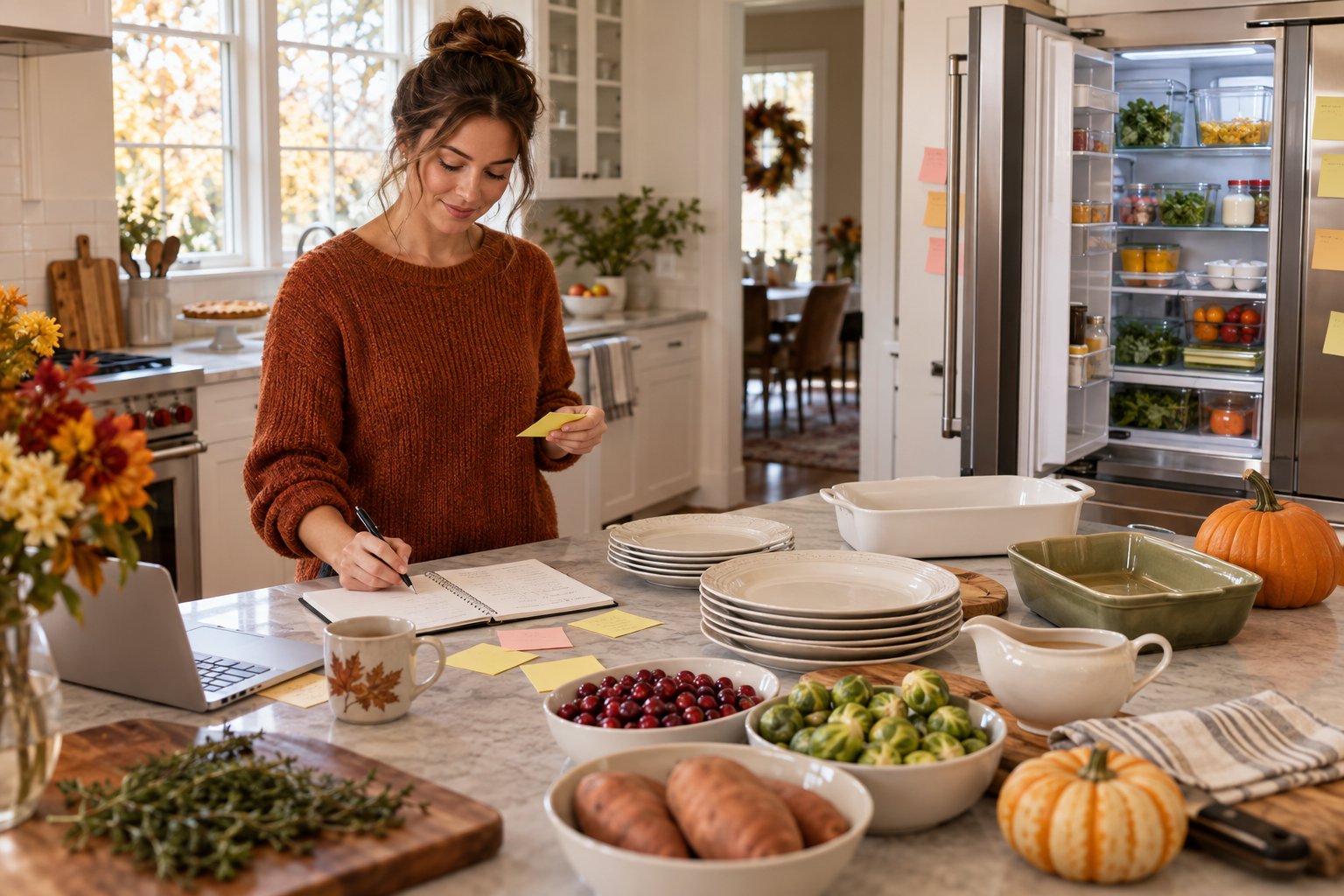
A practical Thanksgiving timeline starts four weeks out with guests and a short menu, moves to shopping and refrigerator space two weeks out, and assigns cooking by equipment during the final week. Work backward from the serving time. Give every dish a storage place, cooking method, and person responsible.
This plan is for a home meal in the United States. Recipes, appliance capacity, dietary needs, and travel can change the timing. Use food-safety instructions from the product, recipe, and U.S. Department of Agriculture.
Four weeks before: decide what dinner is
Confirm the date, serving time, guest count, allergies, access needs, and whether guests are bringing food. Ask for clear answers rather than building the menu around assumptions.
Choose a main dish, a manageable number of sides, bread, and dessert. A first-time host does not need every dish from every branch of the family. Include one familiar item for guests with limited choices, and keep ingredient labels for packaged foods.
Decide what to borrow before buying equipment. Our guide to hosting your first Thanksgiving covers chairs, serving dishes, kitchen tools, and items that may not earn permanent storage.
Three weeks before: map equipment and serving space
Write the cooking temperature, estimated duration, pan, and appliance for every dish. Mark conflicts. Three foods cannot all occupy one oven at different temperatures an hour before dinner.
Choose make-ahead or stovetop dishes to reduce the oven load. Confirm the turkey and pan fit in the oven, with safe air space around them. Locate a food thermometer; visual color is not a reliable cooking test.
Assign guest contributions specifically: “one ready-to-serve salad for eight” is clearer than “bring a side.” Discuss refrigerator and reheating needs before accepting a dish.
Two weeks before: shop for shelf-stable items
Buy canned goods, spices, beverages, napkins, foil, storage containers, and frozen items that fit the plan. Check what is already in the pantry and confirm expiration or best-quality dates.
Clear refrigerator and freezer space. Do not treat a cold garage, porch, or car as a refrigerator. Temperature changes and animals can make outdoor storage unsafe.
Set the grocery and hosting limits inside your holiday budget. A late menu addition should replace something or use the remaining cushion.
One week before: finalize the turkey clock
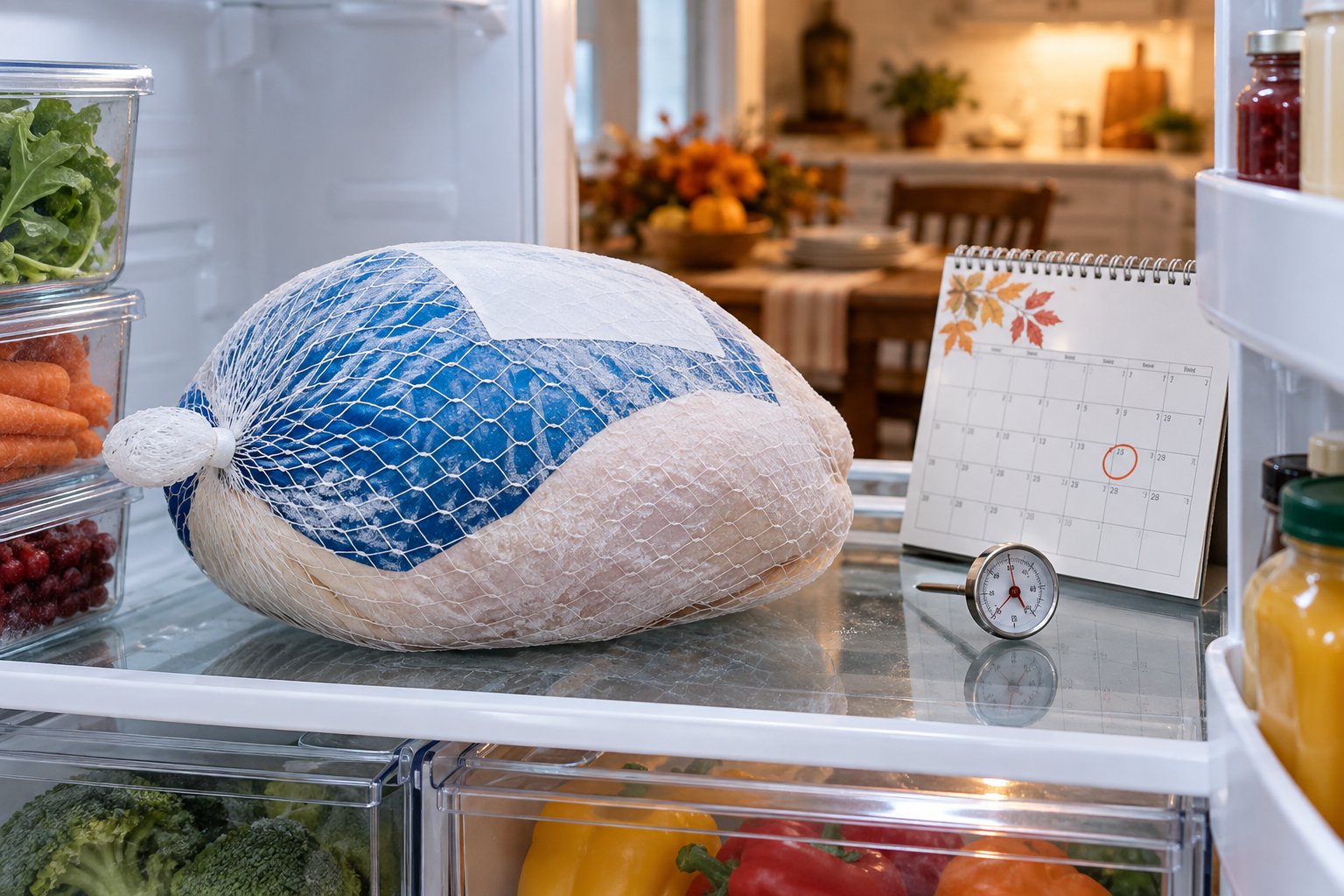
Confirm the turkey weight and thawing method. The USDA recommends roughly 24 refrigerator hours for every 4 to 5 pounds. Use our turkey thawing planner to choose the refrigerator start date.
Make a final grocery list organized by store section. Verify pickup and delivery substitutions rather than assuming every brand or size is interchangeable. If choosing between services, compare the full cost with our grocery pickup versus delivery guide.
Two days before: prepare what stores well
Wash serving dishes, label them with the intended food, and set out shelf-stable beverages. Prepare recipe components that their tested recipes allow to be refrigerated safely.
Chop vegetables only when the recipe and storage method support it. Keep raw turkey and its juices separate from ready-to-eat food. Store ingredients in covered containers and label them.
Review the final-day schedule with everyone helping. Include cleanup, travel pickup, and time to get dressed; those activities still exist on cooking day.
One day before: protect Thursday's workspace
Set the table, finish approved make-ahead dishes, chill drinks, and empty the dishwasher. Put trash and recycling containers where helpers can find them.
Write Thursday's sequence by appliance: oven, stovetop, slow cooker, and cold dishes. Include resting and carving time for the turkey. A recipe's cooking estimate is a planning guide; the thermometer decides doneness.
Thanksgiving Day: cook, hold, and serve safely
The USDA says turkey must reach 165°F in the thickest breast, innermost wing, and innermost thigh. The center of stuffing cooked inside the bird must also reach 165°F. See the agency's Thanksgiving safety guidance.
Keep raw poultry tools away from salad, bread, and cooked food. Wash hands and surfaces as needed. Do not wash the raw turkey; splashing can spread bacteria around the sink and counter.
Use timers with labels such as “potatoes” or “turkey check” rather than several anonymous alarms. Ask one person to manage drinks or the door so the cook is not interrupted during every time-sensitive step.
Within two hours: store leftovers
USDA advises refrigerating perishable food within two hours, using shallow containers so it cools faster. Thanksgiving leftovers are generally safe in the refrigerator for up to four days and should be reheated to 165°F.
Send food home only when it can stay at a safe temperature. Label containers with the date. Freeze portions that will not be eaten within the refrigerator window.
Before going to bed, write down what ran late, what went untouched, and which borrowed item needs to be returned. That note is the beginning of next year's easier timeline.
Did this guide help?
Your optional support helps PeekBlue research and publish practical guides that remain free for everyone.
Support PeekBlue One-time support. Articles stay free.