A fall home energy check should begin with the heating filter, thermostat schedule, obvious air leaks, water-heater setting, and last winter's utility bills. Complete the low-cost checks before buying equipment. The biggest bill is the first place to investigate, but comfort and safety still matter.
The U.S. Department of Energy notes that heating can account for almost half of a family's winter energy bill. Its home energy checklist recommends regular filter care, sealing large air leaks, using window coverings, and reviewing bills to identify the largest energy use.
Start with last winter's bills
Collect electricity, natural gas, heating oil, or other fuel bills from the coldest months. Compare usage, not only dollars, because rates can change. Mark the highest-use month and note whether the home was occupied differently, the weather was unusual, or equipment had a problem.
Do not compare one house directly with a neighbor's bill without considering size, fuel, insulation, thermostat settings, and household schedule. Your own year-over-year use is usually the cleaner starting point.
If bills are hard to interpret, ask the utility whether it offers usage reports or home energy assessments. Keep account details private and use the utility's official contact page.
Check the filter and schedule maintenance
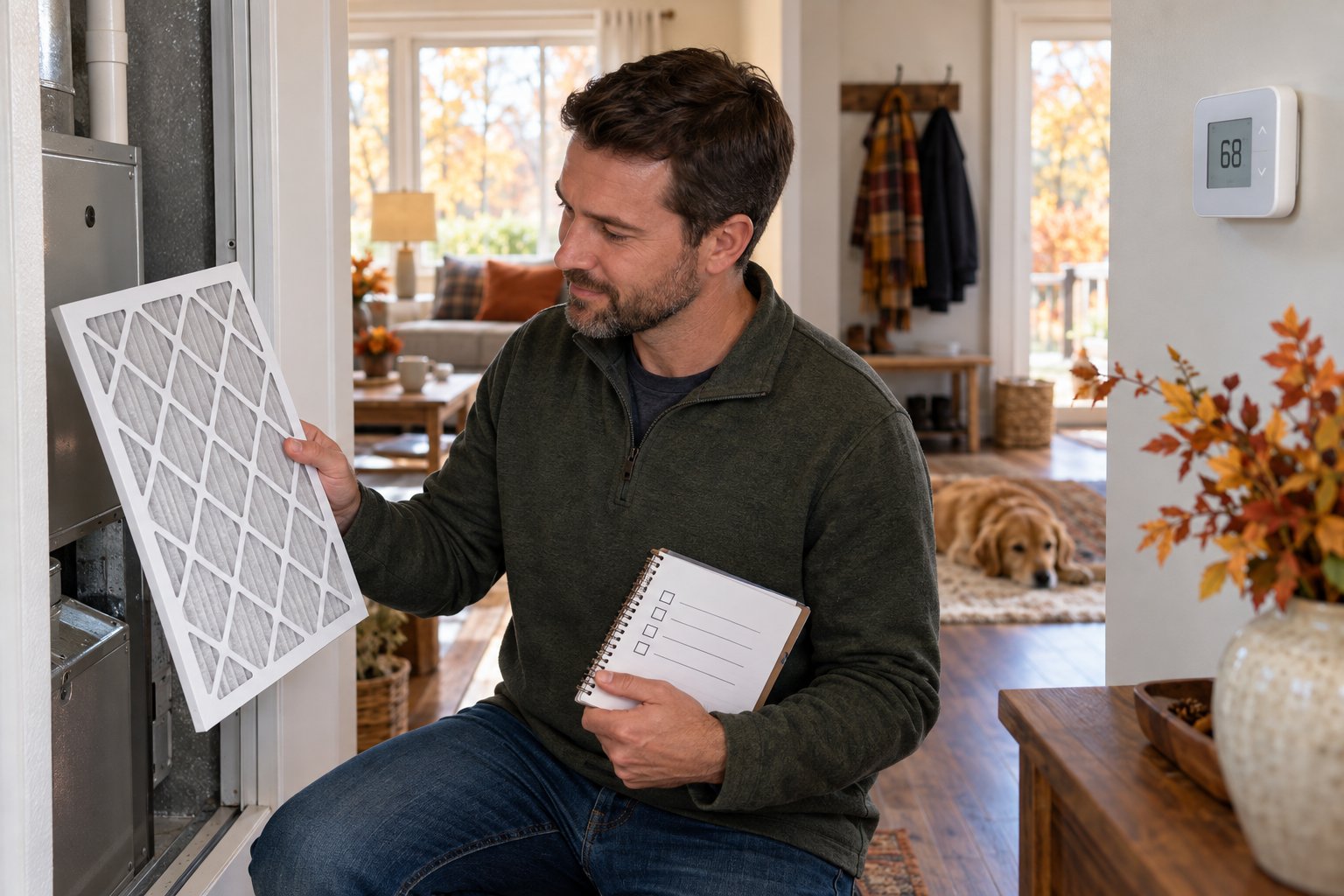
Find the filter size and installation direction before removing it. Replace or clean it according to the system and manufacturer's instructions. ENERGY STAR recommends checking filters monthly during heavy-use seasons and changing a dirty filter; at minimum, many systems need a change every three months. See its heating and cooling guidance for the full checklist.
Book professional service when the system requires it or shows warning signs such as repeated shutdowns, unusual odors, soot, or unfamiliar noises. Do not open sealed combustion equipment or attempt repairs beyond the owner's manual and your skill level.
Test smoke and carbon-monoxide alarms according to their instructions. Heating savings are never a reason to block vents, operate an oven for room heat, or use outdoor combustion equipment indoors.
Find drafts before buying a window kit
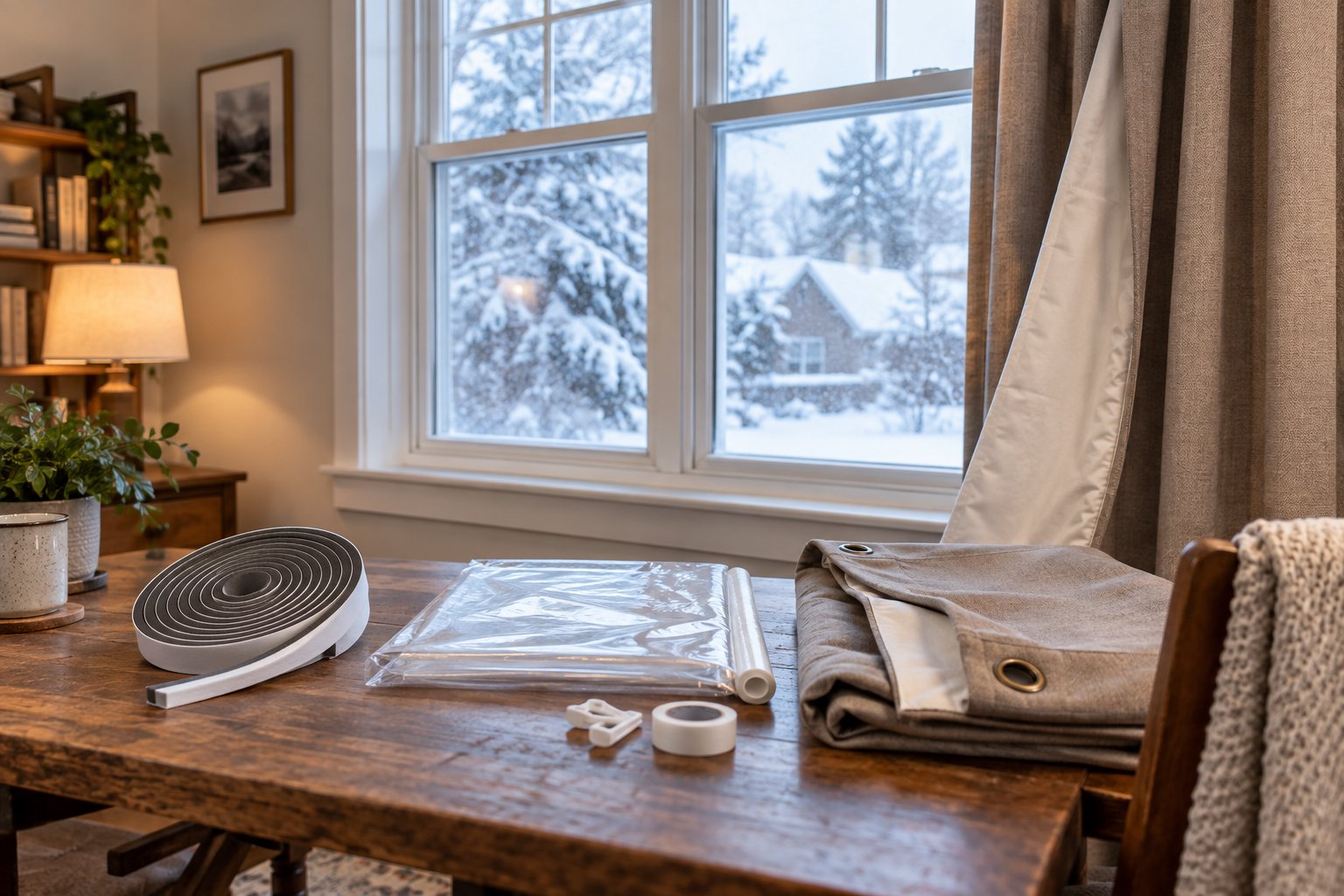
On a cool, windy day, feel around closed windows, exterior doors, plumbing penetrations, and attic access points. Look for visible gaps and damaged weatherstripping. A draft near a window may come from a movable sash, the trim, or another opening nearby.
Renters should document damaged seals and ask the property manager about repairs before making permanent changes. Removable film or draft stoppers may be appropriate when allowed, but they should not cover required ventilation or emergency exits.
Our comparison of weatherstripping, window film, and thermal curtains helps match the fix to the source of the discomfort.
Program the thermostat around real occupancy
Write down when the household wakes, leaves, returns, and sleeps. Use that schedule rather than copying a generic setting. A programmable or smart thermostat can reduce unnecessary heating when the home is empty, but the equipment and household must be compatible with the chosen setback.
Heat pumps and some systems may behave differently from conventional furnaces. Follow the system manufacturer's advice. Before buying a connected device, read our smart thermostat decision guide.
Check hot water and simple daily losses
The Department of Energy checklist recommends a water-heater setting around 120°F for many households, while recognizing that equipment and health needs differ. Check the manufacturer's guidance and use care around hot water. Insulating accessible hot-water pipes may reduce heat loss when the material and location are appropriate.
Look for lights and electronics left on in unused rooms. Plug loads will not replace the value of heating repairs, but routine waste is easy to address.
Use curtains with the sun
Open coverings on sunny, south-facing windows during winter days and close them at night to reduce the chill from cold glass. Keep fabric and furniture away from heaters and radiators. Do not trap moisture against a window for long periods; condensation needs attention.
Finish with a short priority list
Label each finding: free change, low-cost material, landlord request, or professional work. Complete the free and urgent items first. Price the rest before shopping and verify rebates through your utility or an official government source.
Repeat the utility comparison after the first full cold month. The checklist has value when it produces a measured change or identifies a repair, not when it becomes another collection of products in the garage.
Did this guide help?
Your optional support helps PeekBlue research and publish practical guides that remain free for everyone.
Support PeekBlue One-time support. Articles stay free.