
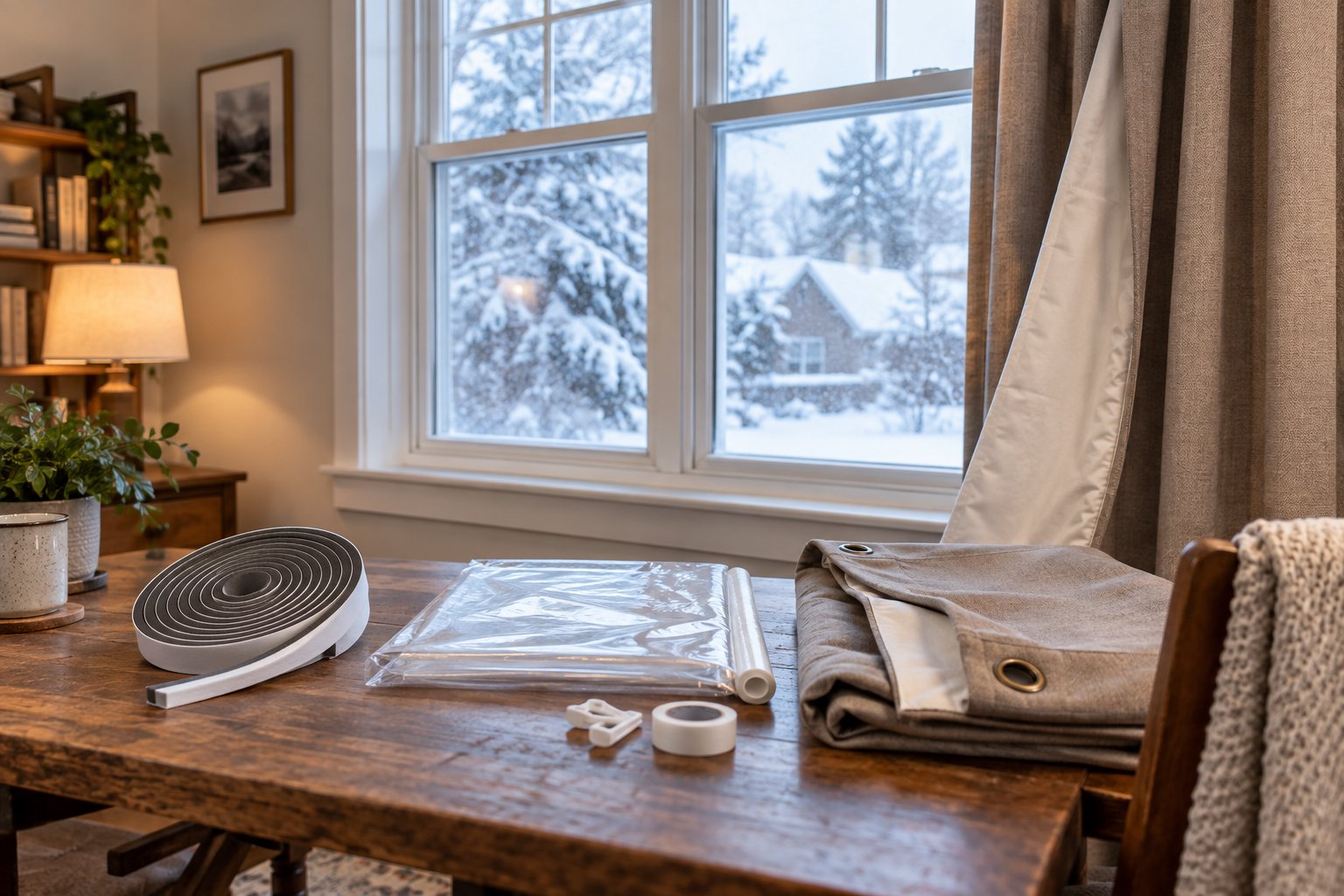
Choose weatherstripping for air leaking around movable window parts, clear insulation film for a temporary interior air layer, and thermal curtains for comfort and light control. These products solve different problems. Check the frame and lease rules before buying, and do not cover an emergency exit or required ventilation.
The U.S. Department of Energy recommends sealing large air leaks and using window attachments as part of a broader home energy plan. Its winter energy tips point to caulk, weatherstripping, and window attachments as ways to reduce heat loss.
Use weatherstripping when air moves at the sash
Weatherstripping belongs where a window or door moves and closes. It fills the gap while allowing the part to open later. Common products include adhesive foam, felt, rubber, and V-shaped strips, each with different durability and fit.
Close the window and identify the leaking edge. Clean and dry the surface. Measure the width and depth of the gap rather than choosing the thickest strip. Material that is too thick can prevent the latch from closing; material that is too thin will not seal.
Weatherstripping is often inexpensive and discreet. It will not repair rotted frames, failed glass seals, or water intrusion. Those conditions need maintenance or professional assessment.
Use window film for a temporary interior barrier
Seasonal shrink film attaches around the interior trim and is tightened with warm air according to the kit directions. It can reduce the feeling of a cold draft by creating a sealed air space.
Film limits access to the window until removal. It may not suit a window needed for ventilation or emergency escape. Tape can affect weak paint or finished wood, so renters should test a hidden area and review the lease.
Installation quality matters. Gaps around the tape defeat the barrier, while excessive heat can damage materials. Follow the product directions rather than improvising with hotter tools.
Use thermal curtains for comfort and flexibility
Lined curtains reduce the cold sensation near glass and can help control light. They are easy to open on sunny winter days and close at night, matching the Department of Energy's home checklist.
Curtains do not seal an air leak around the frame. They can also block a radiator, supply register, or baseboard heater when installed carelessly. Measure width and length, check heat clearances, and use mounting methods that are safe for the wall and allowed by the property owner.
Thermal curtains may be the easiest reusable choice for renters who can install a rod, but they cost more than basic film or foam. Their value depends on keeping and using them in future seasons.
Match the symptom to the fix
Try this sequence:
- If you feel moving air at the closed sash, inspect weatherstripping.
- If the glass feels very cold but the frame does not leak, consider film or a window attachment.
- If the room needs both nighttime insulation and light control, consider lined curtains.
- If you see water damage, rot, cracked glass, or persistent heavy condensation, address the underlying condition.
Two products can work together. Weatherstripping can stop air at the sash while a curtain improves comfort near the glass. Adding three products without diagnosing the window usually creates cost and inconvenience rather than a better seal.
What should renters do first?
Photograph the gap or damage, note the room and date, and report maintenance problems through the landlord's normal channel. Ask before applying adhesive products to painted trim or drilling for a rod.
Choose removable options only after confirming they do not interfere with window locks, ventilation, or escape. Keep receipts and installation instructions so removal is easier.
Our fall home energy checklist covers filters, thermostats, bills, and other checks that may have more impact than one window.
Compare the complete cost
Include the product, tools, replacement adhesive, curtain hardware, and your ability to reuse the item. A $15 film kit may be the right one-season test. A $70 curtain may make sense when it fits the room and will return for several winters.
Fix the source you can identify, then check comfort and energy use over the next cold month. The right product is the one that solves the measured problem without creating a new safety or access issue.
Did this guide help?
Your optional support helps PeekBlue research and publish practical guides that remain free for everyone.
Support PeekBlue One-time support. Articles stay free.