
Grocery Pickup vs. Delivery: Which Actually Costs Less?
Compare grocery pickup and delivery using the full checkout cost, travel, tips, substitutions, and the time each option actually saves.
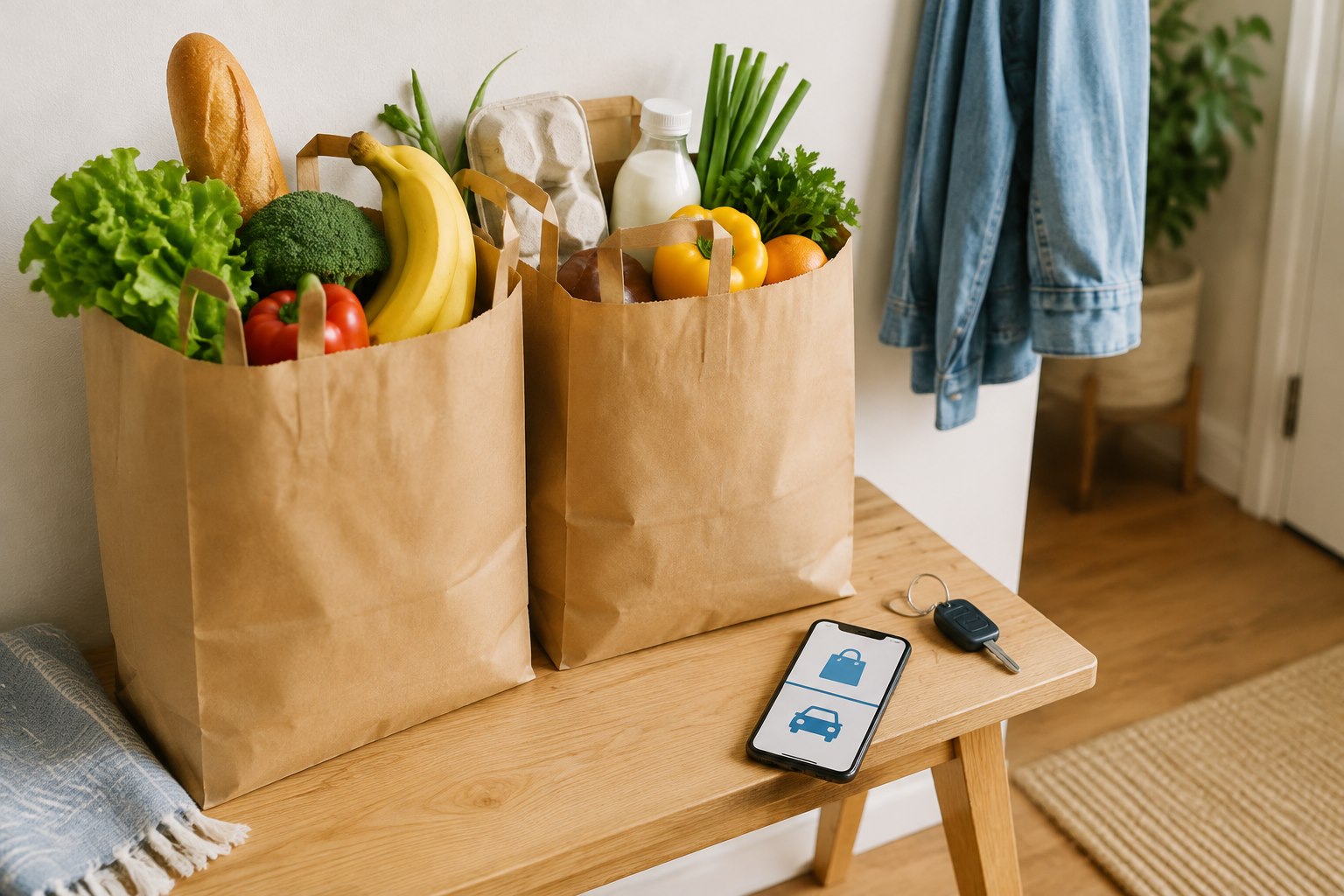
Grocery pickup often has the lower cash cost when you can collect an order during a trip you're already making. Delivery can be worth the extra charge when transport is difficult, time is scarce, or a store visit reliably leads to extra purchases. Compare the same basket and the final checkout totals before deciding.
The useful question is what your household pays to get the groceries into the kitchen. That includes more than a delivery fee, and it may produce a different answer on different weeks.
Compare one identical grocery basket
Build the same list in both options, using the same store location and equivalent products. Match package size, quantity, and brand. Check whether an item is sold by weight, because the final cost of produce or meat may differ from the estimate.
Keep a screenshot or written note of each total before checkout. Avoid placing two orders just to run the comparison. You need the quoted costs, followed later by the actual receipt from whichever option you choose.
Add these lines to each version:
- Item subtotal, including any price differences between channels.
- Service, delivery, small-order, bag, and other checkout fees.
- Any tip you plan to leave.
- Discounts you can actually use without buying extra items.
Taxes depend on your location and basket. Use the amount shown for your order rather than applying a generic percentage to every grocery item.
Membership delivery still needs arithmetic
A delivery membership spreads part of the cost across the year. Divide the membership fee by the number of orders you realistically expect, not the maximum number the plan allows.
For example, an illustrative $100 annual membership used 20 times adds $5 per order. Used 50 times, it adds $2. These are example numbers, not a quoted plan. Then add any charges and tips that remain.
Retailer conditions matter. Walmart's delivery benefit information describes minimum-order conditions and which delivery charges membership removes. Read the terms for your address and delivery type instead of assuming that “free delivery” means a zero-fee checkout.
If you already pay for a membership for unrelated reasons, you can compare today's extra cost without allocating the whole fee to groceries. At renewal, however, review the membership as a whole. Both calculations have a use; don't switch between them just to favor one option.
Put a cost on pickup travel
For a dedicated pickup trip, count the round trip. A simple fuel estimate is miles divided by your vehicle's miles per gallon, multiplied by your fuel price. Parking and tolls belong in the calculation too.
That fuel estimate isn't the full cost of driving. Maintenance and vehicle wear also exist. For a quick personal comparison, label it as a fuel-only estimate rather than pretending it captures everything.
If you collect groceries while passing the store after work, count the extra distance rather than your entire commute. Timing matters: a pickup window that requires you to leave work early can be less convenient than it first appears.
Also check what collection involves. How long can you wait? Can you load the order comfortably? Will someone need to stay with children in the car? The cheapest option on paper must still work on the actual day.
An example with transparent assumptions
Imagine the same groceries cost $85 through either option. Pickup adds $2 in extra fuel. Delivery adds a $6 fee and a planned $5 tip. Without a membership allocation or other fees, pickup totals $87 and delivery totals $96: a $9 difference.
Now imagine pickup would require a special 45-minute trip. You might reasonably pay $9 to avoid it. You haven't discovered that delivery is cheaper; you've chosen to buy convenience at a known price.
Alternatively, if visiting the store usually produces $12 of extras you didn't intend to buy, either pickup or delivery might reduce overall spending. Check several real receipts before counting that as a dependable saving. One unusually expensive shopping trip isn't a fair baseline.
Substitutions can change the winner
Decide how you want substitutions handled before submitting the order. A replacement may have a different size, price, ingredient list, or dietary suitability. For an essential recipe ingredient, specify a workable alternative or decline substitutions.
Look at the final receipt after collection or delivery. Record missing items, replacements, and any additional trip you had to make. A low-fee service that frequently leaves you without dinner ingredients can become the expensive option.
For cold and perishable food, be available to bring the order inside promptly and follow the product's storage instructions. Choose a slot that fits your day; don't rely on a bag sitting outside until you return.
Try a four-order comparison
Over a month, note the grocery subtotal, extra charges, travel, and any follow-up shopping. Add a simple convenience score from one to five. This produces a picture of both cost and effort without turning your weekly food shop into a research project.
You might end up using pickup for planned large orders and delivery for a difficult week. There's no requirement to choose one permanently. Keep an emergency pantry meal so that an unavailable slot doesn't force a rushed expensive order.
Which option should you choose this week?
Choose pickup when the basket costs less, the collection slot is practical, and you're already near the store. Choose delivery when the final premium is acceptable for the time or transport problem it solves. Walk-in shopping remains useful when you want to inspect produce or only need a few items.
Before paying, remove purchases added only to reach a threshold. Spending $14 on things you don't need to avoid a $7 fee increases today's bill. If you add staples, make sure they were already on your household's upcoming list.
For a related everyday tradeoff, see how to choose between a kitchen timer and a phone timer. The same principle applies: choose the option that fits the task you actually have.