
Solid Wood or Veneer Furniture? What Matters for Everyday Use
Compare solid wood and veneer furniture by construction, finish, repair options, moving, and everyday use instead of judging quality by the label alone.
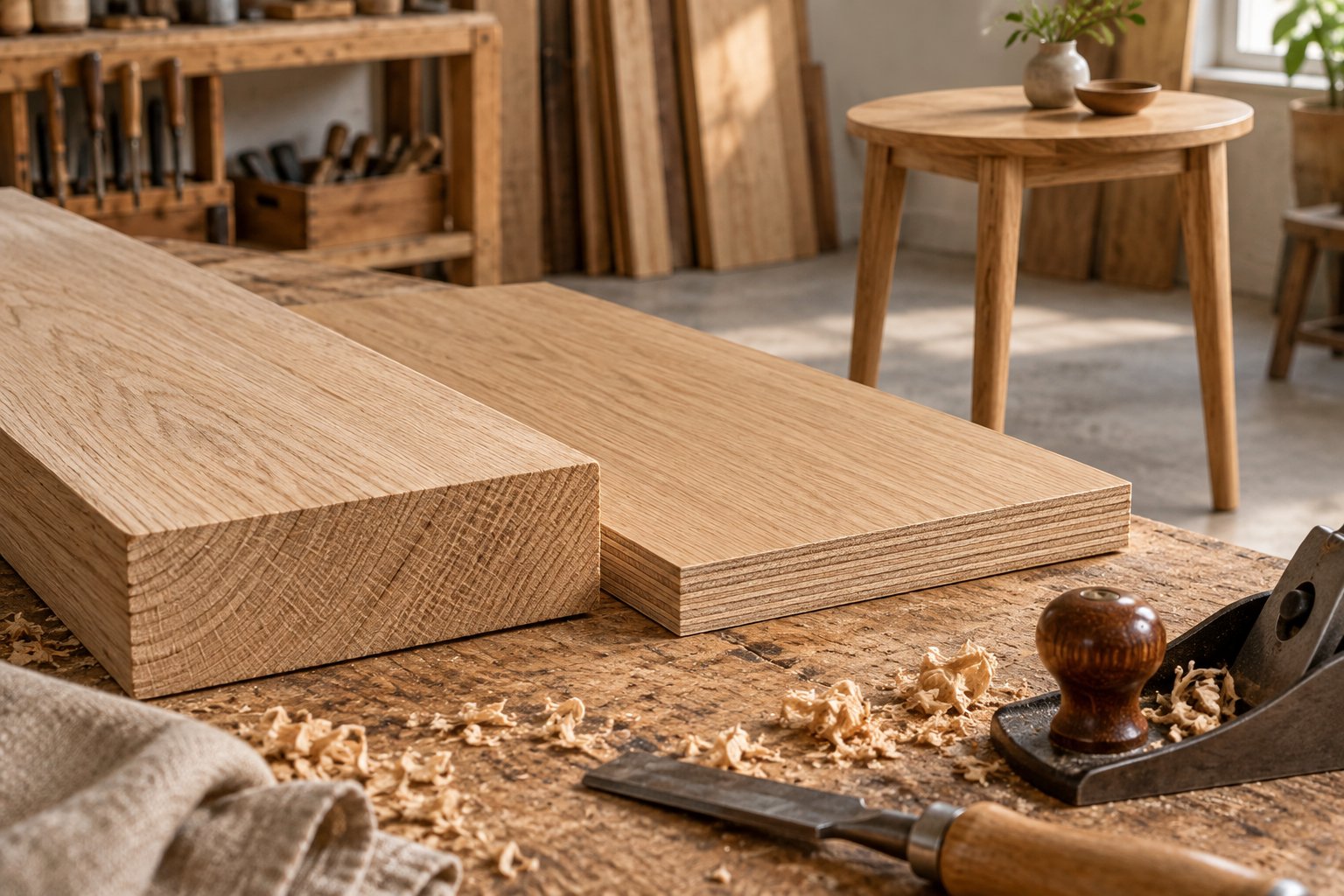
Choose solid wood when its appearance and potential repair options fit the piece you want to keep. Consider veneer when you like the finish and the underlying construction suits your use. Inspect the whole item either way: a material label doesn't tell you whether drawers work well or a table feels stable.
Veneer is a thin layer of real wood applied over a core. It is different from a printed wood-effect surface. Furniture can also combine solid wood, veneer, and other materials in different parts, so ask which description applies to which component.
Compare the actual pieces
- Surface: what will meet cups, keys, spills, or daily handling?
- Structure: how are the legs, frame, drawers, and panels joined?
- Care: what does the manufacturer recommend for that finish?
- Repair: what can be fixed, and who can do it?
- Moving: will the piece fit your route and survive the intended assembly process?
IKEA's guide to table materials describes solid wood and hardwood veneer as different practical options. Use it for material context, then read the specification and care instructions for the exact furniture you are buying.
Look beneath the headline description
A table advertised as oak may have solid oak legs and an oak-veneered top. That combination isn't inherently a problem. What matters is that you know what each part is and whether the construction suits the job.
Ask about the core beneath a veneered surface. Check the edge treatment and the underside where visible. If the description is vague, request a materials breakdown instead of trying to identify everything from a heavily styled room photograph.
For secondhand furniture, look for existing manufacturer labels or model information. Avoid assuming an attractive grain pattern proves the piece is solid wood throughout.
Judge the finish against your routine
A dining table used for homework and meals has a different workload from a side table holding a lamp. Ask how the finish handles ordinary spills and what cleaning products are permitted. Use coasters or other protection where the manufacturer recommends them.
Solid wood is not immune to dents or water marks. A veneer surface is not automatically fragile. Species, finish, edge protection, and the way you use the furniture all affect the result.
If you dislike visible wear, inspect samples or display pieces under ordinary light. A very smooth, dark finish may show marks differently from a textured, lighter one. Decide whether you like the appearance after use, not only on delivery day.
Ask about repair before you need it
Solid wood can sometimes offer more material for refinishing, but that does not mean every piece should be sanded by its owner. A thin veneer has a limited surface layer, so aggressive sanding can expose the core. Ask the manufacturer or a competent refinisher about the exact piece before starting work.
For veneer, inspect lifting edges, chips, and areas where moisture may have entered. For solid wood, inspect cracks, loose joints, and changes that affect function. Both kinds of furniture can have repairs that require skill or cost more than expected.
When buying used, price the object as it is unless you have a credible repair plan. “I'll fix it later” should not be the only reason a damaged piece fits your budget.
Test the hardware and structure
Open drawers fully, check door alignment, and ask permission to test stability. Look for missing fixings and damaged attachment points. Read weight limits for shelves or surfaces when relevant.
If you will assemble the piece, review the instructions and required tools before ordering. Check whether replacement hardware is available. Furniture that may be moved repeatedly deserves particular attention to its joining system.
Our first-apartment buying guide helps decide where buying used makes practical sense and where uncertainty can add work.
Include delivery and your next move
Measure doors, turns, staircases, and the space where the item will stand. Compare the largest assembled part with the route it must take. Ask which pieces can be removed and whether the delivery service includes assembly.
Don't choose by weight alone. A heavy piece is not automatically better built, and a lighter one is not necessarily easier to move safely. Know how it will be carried and protected.
Before paying, record the materials by component, overall dimensions, care instructions, and any known damage or repair needs. For smaller spaces, our renter-friendly storage ideas may help you decide whether another large piece is necessary at all.
Buy the furniture whose construction and upkeep match your home. Solid wood and veneer are useful descriptions, but the everyday experience comes from the finished object.
Cover: AI-generated editorial illustration, not a photograph of a specific retailer product.