Start renter-friendly storage with solutions that sit inside existing furniture or use space already available: drawer dividers, under-bed containers, shelf inserts, and hanging closet organizers. Check dimensions and weight limits before buying. “No drilling” describes installation; it doesn't guarantee that a product suits every wall, door, or rental agreement.
Choose one recurring problem first. If finding shoes is difficult, solve shoe storage before buying a matching set of organizers for the whole apartment.
Match the organizer to the problem
- Shallow drawers: adjustable dividers.
- Unused space below a bed: low, accessible containers.
- Tall cupboard shelves: a small shelf insert.
- Crowded closet shelves: a hanging fabric organizer.
- Loose entryway items: a low basket or tray.
- Suitable doors: a properly fitting over-door organizer.
- Lightweight objects on approved surfaces: manufacturer-rated removable hooks.
Measure before ordering, then buy a small number to test. Organizers consume space themselves, and a poor fit can leave less useful room than you had before.
1. Divide a drawer you already own
Drawer dividers work well for utensils, socks, small stationery, or cables that become difficult to find when mixed together. Sort the contents first and remove items that belong elsewhere. Measure the internal width, depth, and height, not the furniture's outside dimensions.
Choose dividers that leave enough room for your largest regular item. A beautiful grid of tiny compartments won't help if your everyday spatula or charger can't fit. Avoid a tight spring-loaded fit that presses excessively against delicate drawer sides.
Start with one drawer. If the layout still works after a week, repeat the idea where the problem is similar. You don't need every drawer to have identical compartments.
2. Use low containers under the bed
Under-bed containers can hold seasonal clothes, spare linens, or occasional-use items. Check the clearance at the lowest point, including bed-frame supports. Leave enough space to pull the container out without lifting the bed.
Choose a closure appropriate to the contents and conditions. A container shouldn't trap damp fabric, and the storage area should remain dry. Avoid squeezing objects around electrical cords or blocking access you need for cleaning.
Group items by use and add a simple label you can read from the side. Keep everyday clothing in an easier location if accessing the box requires moving a rug or several other containers.
3. Add an insert inside a cupboard
A small shelf riser can divide a tall cupboard into two usable levels. It can suit mugs, bowls, or pantry items when the shelf and insert can safely support the load. Measure with the door closed, including hinges and any lip at the front.
Check the insert's rated capacity and the shelf underneath it. Place heavier items lower and keep frequently used pieces easy to remove without disturbing everything above them.
For spices, consider whether a riser lets you see labels or merely creates another hidden row. Our spice-storage guide explains when a rack helps and when changing the containers is the more useful step.
4. Hang a fabric organizer from a suitable closet rail
A fabric organizer can convert some hanging space into compartments for light folded clothing or accessories. Check the organizer's load limit and the closet rail's condition and capacity. Keep the filled organizer clear of sliding doors.
Use it for items that retain their shape without being tightly packed. Heavy books, tools, or bottles are poor choices for a product designed for clothing. A few usable shelves are better than sagging compartments full of miscellaneous objects.
Compare the space it occupies with the clothes you'll displace. If your closet already has too little hanging room, a hanging organizer may shift the problem rather than solve it.
5. Give the entryway a low landing place
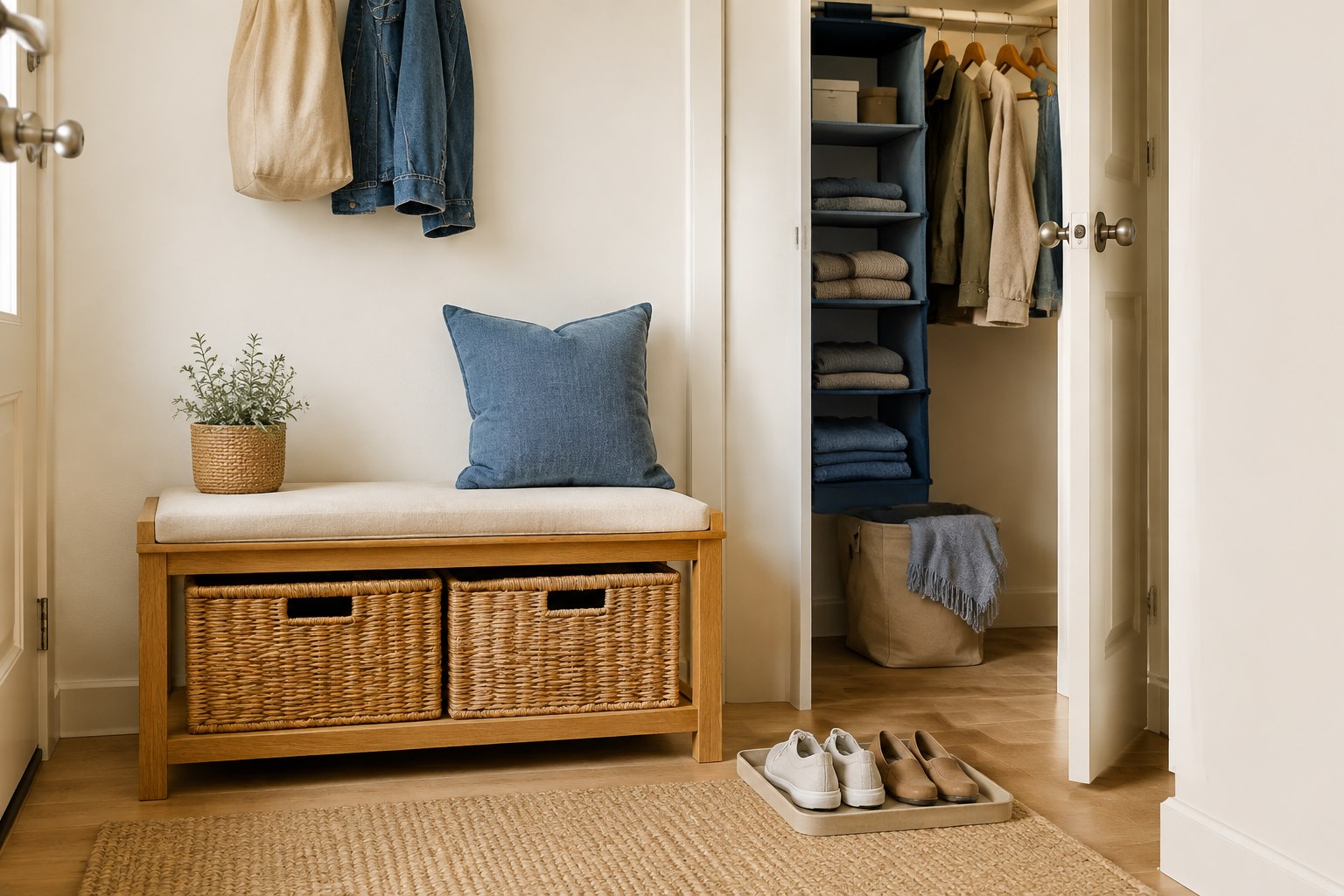
A shallow tray for keys and a low basket for reusable bags can prevent small objects from spreading across the apartment. Use an existing shelf, sturdy bench, or suitable floor space that doesn't obstruct the doorway.
Keep the categories narrow. A basket labeled “bags” is easier to maintain than a basket intended for everything that doesn't yet have a home. Empty or sort it regularly before it becomes a second junk drawer.
Avoid tall storage furniture purely to gain a few extra compartments. Furniture that requires anchoring still needs it; the CPSC's furniture tip-over guidance remains relevant in a rental.
6. Check an over-door organizer against the actual door
Measure door thickness and the clearance at the top. Confirm the door can close normally without forcing the hooks against the frame or damaging the finish. Check that the organizer won't interfere with locks, hinges, or a required exit.
Use the product for the load it was designed to carry. Heavy shoes or cleaning bottles can make an organizer behave differently from the lightweight accessories in a product photo. Follow installation directions and periodically check the contact points.
An over-door rack is a poor choice when it prevents proper closure or creates repeated banging. In that case, a low basket or internal cupboard organizer may be more practical.
7. Reserve removable hooks for suitable lightweight jobs
Read the exact product instructions for surface preparation, waiting time, weight, and removal. Command's official FAQ explains that conditions and rated loads matter; adding hooks isn't a general way to multiply the allowed weight.
Check the lease or ask the property manager when surface attachment is uncertain. Fresh paint, textured finishes, moisture, and delicate surfaces can make a proposed location unsuitable. Avoid claims that any adhesive product is universally damage-free.
Use a hook for a defined small task, such as hanging a light reusable bag on an approved surface. Don't substitute adhesive hooks for required furniture anchoring or support something whose fall could cause injury.
Keep the system easier than the mess
After a week, notice which items still land on the counter. That usually means the chosen storage is too far away, hard to open, or poorly matched to the object. Adjust the location before buying more containers.
Leave some empty capacity. An organizer packed to its limit is difficult to maintain and gives you nowhere to put the next ordinary item. The most useful storage is the setup you can put things back into without a second thought.
Did this guide help?
Your optional support helps PeekBlue research and publish practical guides that remain free for everyone.
Support PeekBlue One-time support. Articles stay free.