
Your First Apartment: What to Buy New, Buy Used, or Skip
Furnish a first apartment around everyday needs. Decide what to buy new, inspect secondhand, borrow, or postpone until you know the space.
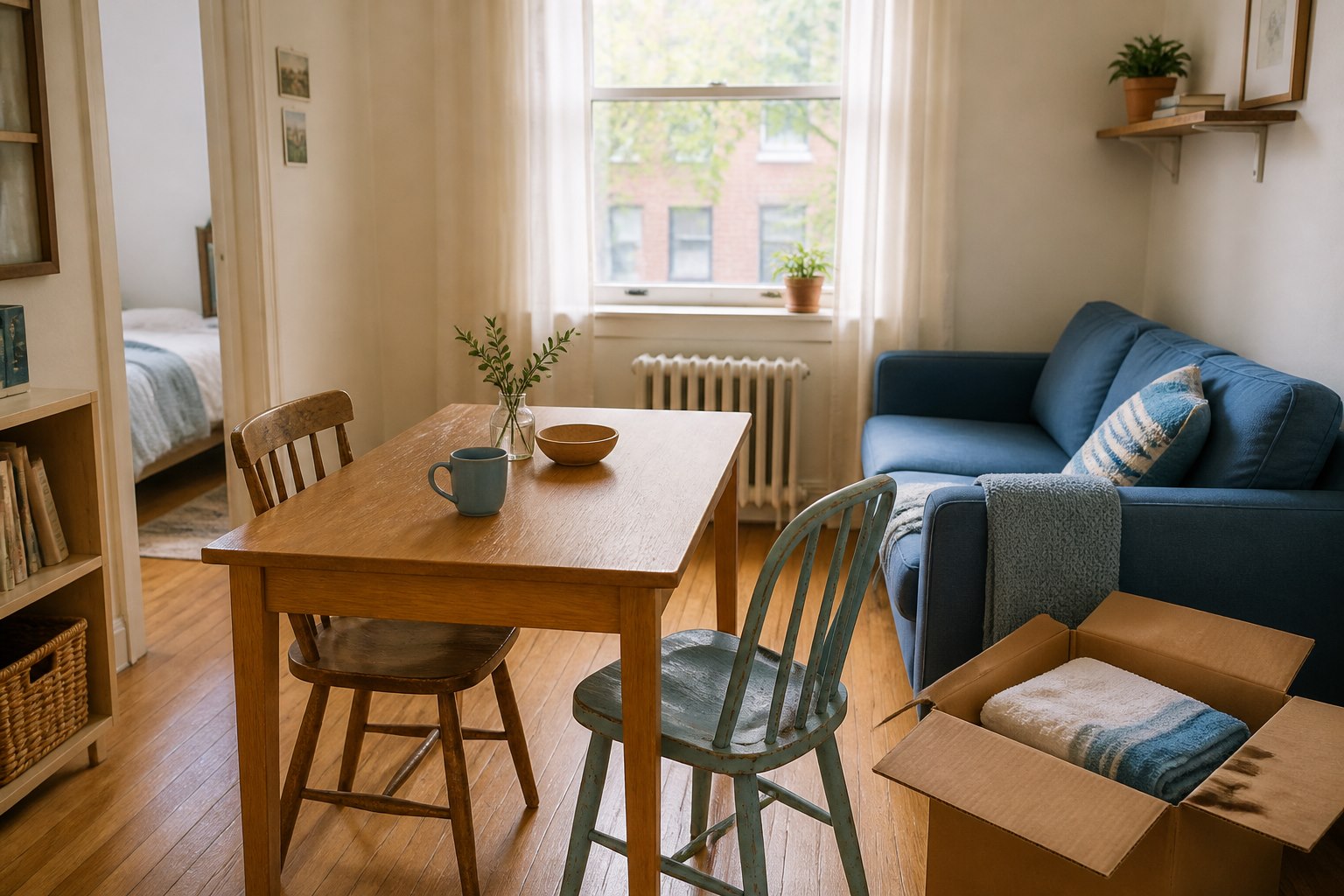
Buy the things that make your first apartment usable immediately, consider secondhand options you can inspect, and postpone purchases that depend on habits you haven't established yet. You need a place to sleep, a workable bathroom, and enough kitchen equipment for meals you actually make. A fully furnished apartment can wait.
The best starting list comes from your first ordinary week. Picture getting ready for work, eating dinner, doing laundry, and finding somewhere to put your keys. Spend on those routines before filling every empty corner.
Separate move-in money from furnishing money
Before shopping, account for deposits, moving costs, utility setup, and the next rent payment. Leave room for an unexpected expense. A sofa discount isn't helpful if buying it leaves no money for the practical costs of occupying the apartment.
Make four lists: needed before the first night, needed during the first week, worth considering later, and unnecessary for now. Assign a spending limit to the first two lists. This prevents a decorative purchase from using the money reserved for bedding or a shower curtain.
Don't use another person's apartment checklist as a mandatory shopping cart. Your rental may already include appliances, window coverings, or useful shelving. Confirm what's there before buying duplicates.
Usually worth buying new: personal basics
For bedding and towels, new purchases make size, condition, and care instructions easy to confirm. You don't need a matching set. Start with enough clean bedding and bathroom textiles to cover use and laundry, then add more only if the routine requires it.
A mattress deserves a careful budget decision because you'll use it nightly and transport can be awkward. Compare the full delivered cost, the actual return process, and whether the base or frame you need is included. A long advertised trial is less useful if collection fees or packaging requirements make returning it difficult.
Buy basic cleaning supplies in quantities you can store safely. A cloth, suitable cleaner, trash bags, and a simple floor-cleaning tool may cover the first week. Avoid a large bundle of unfamiliar chemicals and duplicate tools.
Personal items that need a close fit or have difficult-to-assess wear can also be easier to buy new. “New,” however, doesn't mean “most expensive.” Look for straightforward products that solve the immediate task.
Often worth considering used: simple, inspectable furniture
A sturdy dining table, uncomplicated chair, or small side table may be a good secondhand purchase when you can inspect its condition. Check joints, legs, stability, moisture damage, sharp edges, and missing hardware. Sit in a chair before agreeing to buy it if inspection is available.
Measure the apartment door, stairs, elevator, and the path to the final location. Add pickup or delivery to the asking price. A low-cost table that requires an expensive van rental may lose its advantage quickly.
Search the model or manufacturer in the CPSC recall database, especially for furniture and electrical products. Skip an item whose identity, condition, or required parts you can't establish. A seller's reassurance doesn't replace an inspection.
Furniture still needs its specified safety setup. The CPSC's Anchor It guidance addresses furniture tip-over prevention. If an item requires anchoring, arrange appropriate installation and rental permission instead of treating “freestanding” as permission to omit it.
Buy kitchen equipment around two familiar meals
Choose two meals you regularly cook and list the tools they require. A pan, a pot, an appropriate knife and cutting board, and a few eating utensils may be enough to begin. Your list could be different if you mostly reheat prepared meals.
Avoid buying a large cookware set because the price per piece looks low. Count the pieces you'll use, including how much cupboard space their lids require. A useful individual pan can be better value than several awkward sizes.
Keep small appliances off the immediate list unless they replace a routine you already have. Measure the counter and read operating clearances before buying. Our kitchen timer comparison is an example of checking whether an existing device already does the job.
For gifts from family or friends, share a short list with exact sizes or a preferred store. That makes it easier to receive something useful without collecting duplicate kettles or dishes that don't fit your shelves.
Skip these purchases until you know the space
- Large organizers bought before measuring the storage problem.
- Guest furniture for visits that haven't been planned.
- Matching decorative sets that lock you into a room layout.
- Equipment for a cooking or exercise habit you haven't started.
- Oversized bulk supplies with no suitable storage location.
Leaving a corner empty is useful. It lets you discover how you move through the room and whether a piece of furniture would obstruct a door, radiator, or walkway.
The first apartment often has more than one job for each surface. A dining table may also be a desk. Live with that arrangement long enough to see what is uncomfortable before buying a separate desk merely because a furnishing list includes one.
A simple example budget method
Suppose you've set aside $600 for initial furnishings after essential moving costs. List the minimum sleep setup, bathroom items, and basic kitchen equipment first. Use actual local prices, delivery charges, and tax to see what remains. This is a budgeting method, not a claim that every apartment can be furnished for $600.
Keep a separate wish list for the remaining money. If a secondhand chair appears at a good price, compare it with that list instead of buying on urgency alone. Photograph measurements in your phone so you can check fit while shopping.
Reassess after the first two weeks
Write down the small frustrations you keep encountering: nowhere to dry a towel, inadequate light near a chair, or a shelf that wastes vertical space. Solve the repeated problem first. The desk-gift guide uses the same test: identify the job and available space before selecting the object.
Your apartment doesn't need to look finished immediately. It needs to work for the people living there. Each purchase should make an ordinary day easier without creating a storage, cleaning, or payment problem that lasts longer than the excitement of moving in.