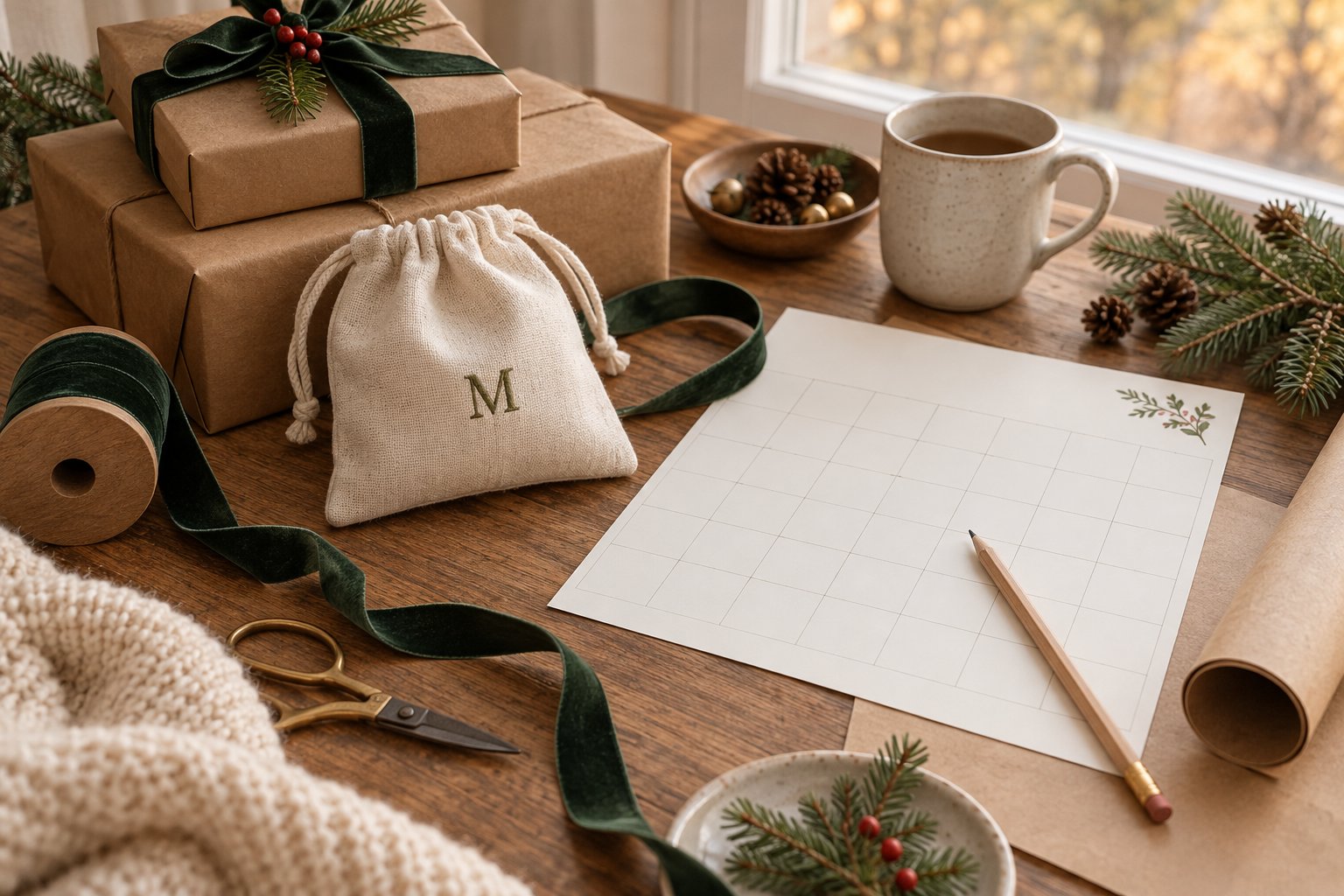

Choose a desk gift by identifying one repeated task, checking where the item would fit, and making sure it replaces or improves something already used. If you don't know the workspace well, ask a small practical question or choose a consumable. Personalization should come after usefulness, because it makes an unsuitable gift harder to exchange.
A desk has limited working space. The recipient may already have a careful arrangement, even if it doesn't look organized to you. A gift succeeds when it respects that arrangement and solves a problem the owner actually recognizes.
1. Find the task behind the object
Instead of starting with “What desk accessory looks nice?”, ask what the person repeatedly does. Do they take handwritten notes during calls? Move a laptop between rooms? Search for a charging cable? Carry work supplies home at the end of the day?
Each habit points toward a different possibility. A refill for a pen they love may beat a new pen set. A small pouch may help a mobile worker more than a permanent desktop organizer. A notebook is useful only if paper already has a role in their day.
Use something they've mentioned as evidence. “My cable keeps slipping behind the desk” is a clearer clue than “They work in an office.” If you can't name the task, pause before buying the object. General usefulness doesn't establish usefulness for this recipient.
2. Check the workspace's real constraints
A home office, a shared workstation, and a hot desk have different needs. Someone who clears the desk each evening may prefer a gift that fits in a bag. Someone with a dedicated office might welcome an object that stays in one place.
For a physical accessory, check its footprint and the space needed to use it. A phone stand can be compact when empty but need more depth once a charging cable is connected. An organizer's drawers need room to open. A lamp's base may compete with the mouse area.
OSHA's computer workstation guidance on desks notes that limited surface space can push equipment into undesirable positions. Use that as a reason to respect working space, not to promise that a gift will improve someone's posture. Avoid taking over an area they need for their usual equipment.
3. Ask one question that preserves some surprise
You don't need to reveal the exact present to check an important detail. Ask whether they still use a particular notebook size, whether their desk is shared, or whether they prefer their phone flat or upright while working.
Compatibility questions are especially valuable for tech accessories. Check the device model, relevant connector, case thickness, and any power requirements. A product labeled “universal” still needs to fit the actual device and intended use.
For a coworker, stay within information they've willingly shared. There's no need to inspect their workspace closely or ask colleagues to investigate it. If the necessary detail is difficult to obtain naturally, choose a less specific gift. A comfortable question should make the choice easier for both of you.
4. Prefer a replacement or a small improvement
The simplest clutter test is to ask what leaves when the gift arrives. A better notebook can replace the next notebook purchase. A suitable cable holder can take the place of a makeshift clip. A second decorative pen cup may replace nothing.
That doesn't mean every present must be strictly utilitarian. A small print or ornament can be welcome when you know the recipient wants that kind of decoration. The important part is that the preference belongs to them.
Try this sentence: “This would help them ___ without needing to ___.” For example, a flat accessory pouch might help someone move between offices without transferring loose items one at a time. If the second blank becomes “reorganize the entire desk,” the gift is asking for more than you may intend.
5. Count the hidden obligations
A plant needs suitable light and ongoing care. A connected gadget may require an account or software. A rechargeable accessory needs charging. A specialty pen needs compatible refills. Those obligations can be reasonable, but they should fit an existing habit.
Consider the shared environment too. Sounds, lights, and fragrances may affect other people. A silent, compact object is usually easier to accommodate than something that announces itself across the room. Check workplace rules if the gift involves electronics, food, or anything installed on office furniture.
Keep the first use straightforward. Include necessary accessories and instructions, but don't configure a personal account on the recipient's behalf. Let them decide how a device connects to their equipment and data.
A few useful matches, and when to skip them
A favorite pen's refill: suitable when you know the exact model and ink preference. Skip an approximate substitute that only looks compatible.
A compact notebook: suitable for someone who regularly fills paper notebooks. Check binding, page size, and whether they prefer lined, dotted, or plain pages.
A cable holder: suitable for a known slipping-cable problem. Check cable thickness and whether its attachment method suits the desk. Adhesive products aren't automatically appropriate for shared or delicate furniture.
A familiar tea or snack: suitable when you know preferences and dietary requirements. Choose an amount they can comfortably use and check whether food is welcome at their workspace.
A small accessory pouch: suitable for a mobile worker with loose essentials. Skip it if their current bag already provides the organization they want.
These are examples to match against real habits, not a universal shopping list. You can give a modest version thoughtfully without turning the present into a desk makeover.
Make exchanging it easy
Keep the gift receipt and check the return deadline. Avoid engraving, custom printing, or removing packaging until you know the recipient wants that specific object. A name on the product doesn't solve a poor fit.
Explain the connection in a short note: “You mentioned moving your chargers between offices.” That makes the thought visible while leaving them free to use the gift differently or exchange it.
If you're still uncertain, choose something that gets used up, or invite the person to select the item within a budget you're comfortable with. A desk gift doesn't need to occupy the desk permanently to feel personal.
Did this guide help?
Your optional support helps PeekBlue research and publish practical guides that remain free for everyone.
Support PeekBlue One-time support. Articles stay free.