
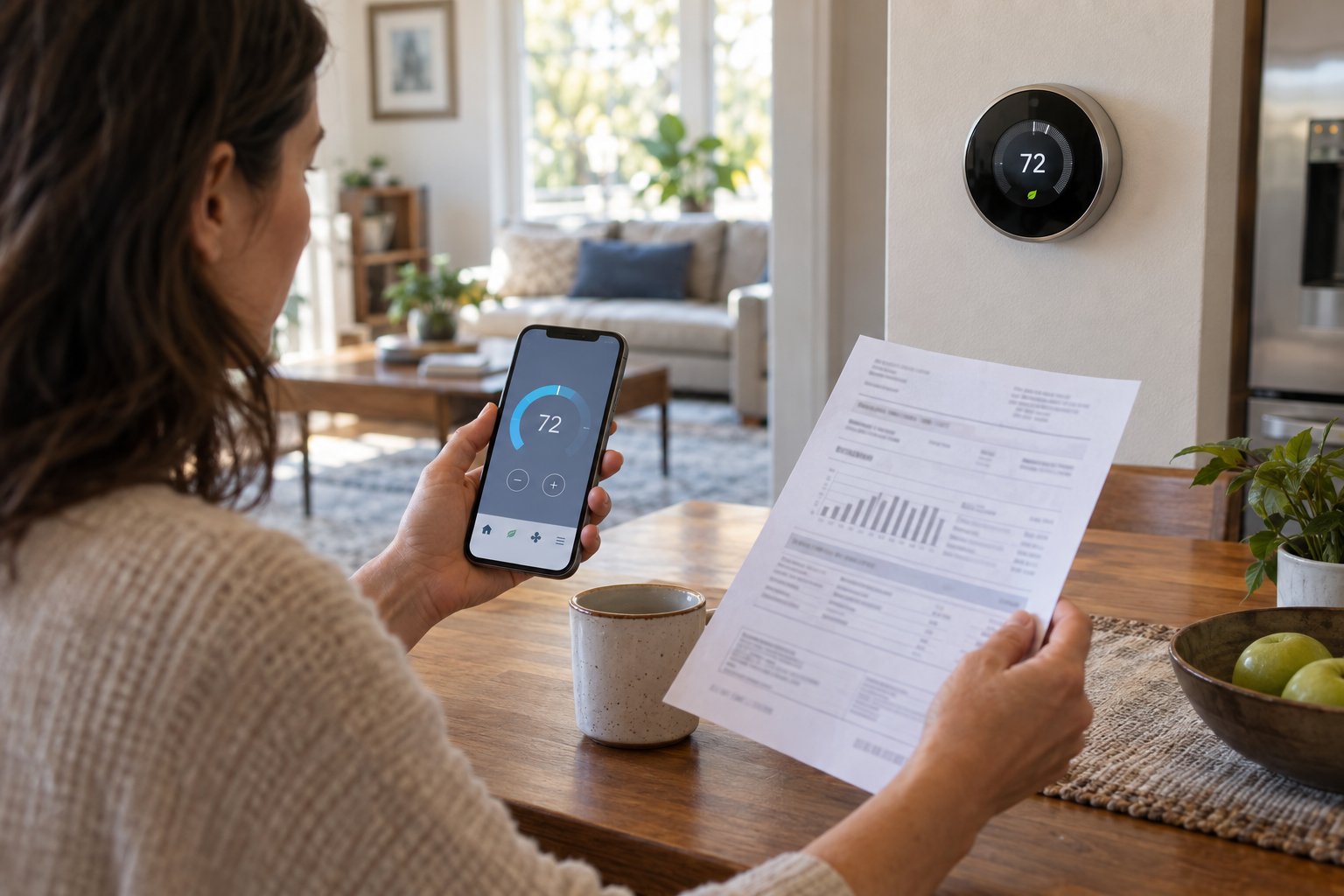
A smart thermostat is most likely to be worth it when your heating and cooling run often, the home is empty on a regular schedule, the device is compatible with the system, and you will use automatic setbacks. It may offer little value when someone is always home, the current thermostat already follows an efficient schedule, or installation needs expensive wiring changes.
ENERGY STAR says heating and cooling account for almost half of the average American household's annual energy bill. Its heating and cooling guidance estimates that homes with high bills or long unoccupied periods may save about $100 a year with a certified smart thermostat. That is an estimate, not a guarantee for every home.
Check compatibility before comparing features
Identify the heating and cooling equipment, current thermostat wiring, number of stages, and whether the system uses a heat pump, electric resistance backup, boiler, or another setup. Use the thermostat manufacturer's official compatibility tool and compare the answer with the HVAC system documentation.
Some devices need a common wire or adapter. A low product price can become a poor deal if installation requires additional wiring or professional work. Do not move wires based only on color; confirm terminals and turn off power as directed.
Renters need written permission before replacing fixed equipment. Ask who owns the new device, who restores the original thermostat at move-out, and whether the building controls part of the system.
Estimate value from behavior, not the app screen
Write down the current schedule. If you already lower or raise the temperature when the home is empty, a smart thermostat may mainly add convenience. If the system heats or cools an empty house for hours, automation has more room to help.
An ENERGY STAR certified device is tested using field data to meet energy-saving criteria. Review the ENERGY STAR smart thermostat guide and its current certified product list rather than assuming every Wi-Fi thermostat has demonstrated savings.
Calculate a simple payback:
Installed cost minus rebate ÷ expected annual savings = estimated payback years
If the installed cost is $180 after a rebate and estimated savings are $60 a year, the simple payback is three years. Actual results depend on climate, rates, equipment, occupancy, and settings.
Check rebates before buying
Search the utility's official website and the ENERGY STAR rebate finder. Confirm model eligibility, purchase dates, installation requirements, and whether the program requires enrollment in demand-response events.
Some programs may adjust settings during grid events while allowing an override. Read the terms before accepting a rebate. A discount is not free money when it includes a program you do not want.
Review privacy and account dependence
A connected thermostat may collect temperature, equipment use, occupancy signals, location-based events, and account information. Read the current privacy policy and find out what happens if internet service fails or the manufacturer ends support.
ENERGY STAR criteria require certified thermostats to work as a basic thermostat when connectivity to the service provider is unavailable. Still, app features, remote control, and reports may depend on an account and cloud service.
Use a unique password and enable stronger account protection when offered. Decide which household members need app access instead of sharing one password widely.
Compare with the cheaper alternatives
A programmable thermostat may handle a predictable weekly schedule without an app. Manual changes can work for a household willing to maintain them. Filter replacement, duct sealing, and air-leak repair may deserve money first when the system is struggling.
Start with our fall home energy checklist and window comparison for weatherstripping, film, and curtains. A connected thermostat cannot compensate for a furnace that needs service or a window that will not close.
Use a five-question decision
Buy only if you can answer yes to most of these:
- Is the device confirmed compatible?
- Does the home have regular empty or sleeping periods?
- Is the installed cost reasonable after verified rebates?
- Will you use schedules, geofencing, or reports?
- Are the account, privacy, and utility-program terms acceptable?
Keep the receipt and original thermostat until installation and testing are complete. After one full heating or cooling month, compare energy use with a similar month while accounting for weather. The app is convenient evidence; the utility bill is the result that matters.
Did this guide help?
Your optional support helps PeekBlue research and publish practical guides that remain free for everyone.
Support PeekBlue One-time support. Articles stay free.