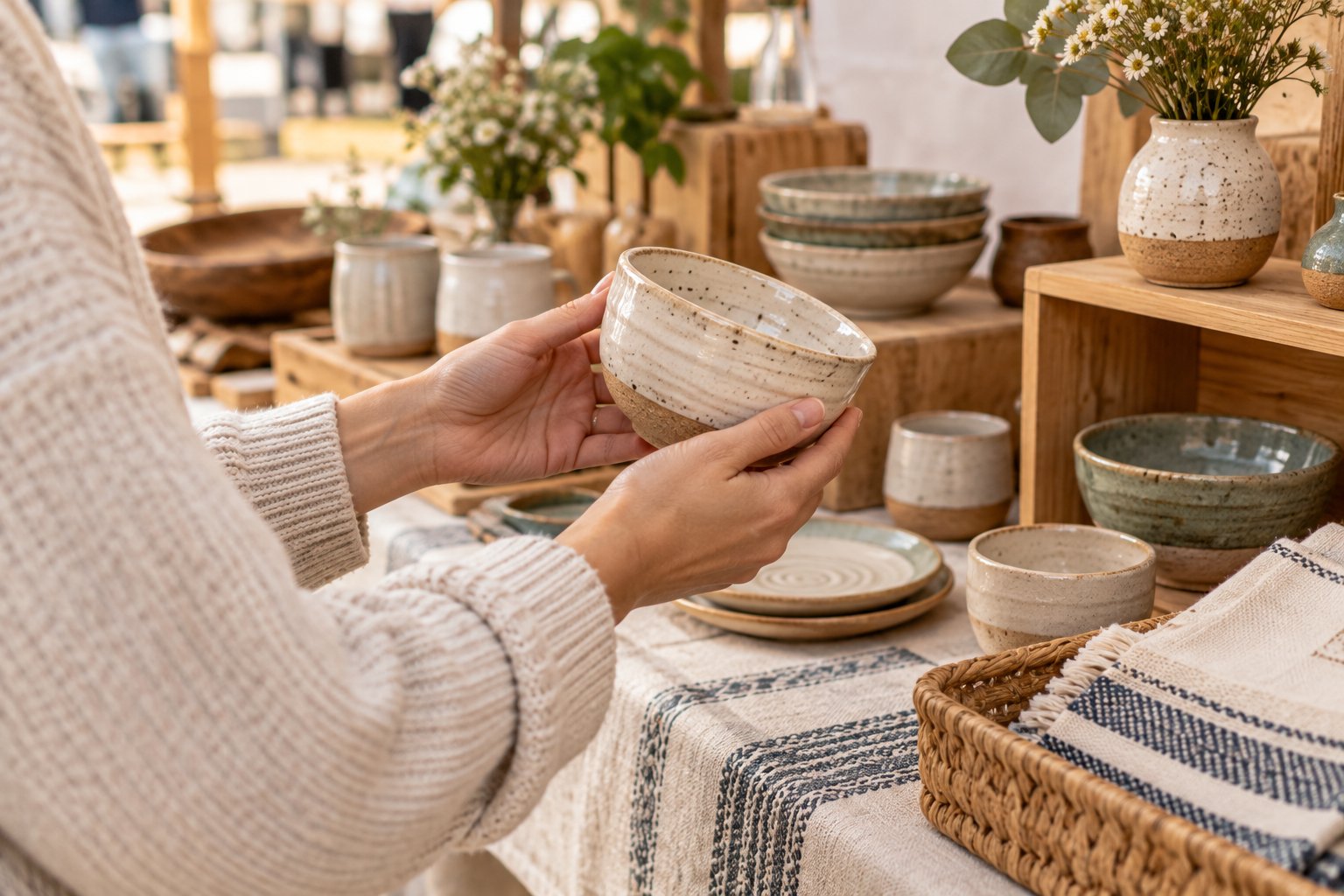
At a craft fair, ask the questions a product photo can't answer: who made the item, what it is made from, how you will use it, and what support exists after the event. You can often inspect the object directly and speak with the person who understands it best.
You don't need to interview every vendor. Choose the questions that affect your purchase and ask when the booth isn't handling another customer's payment. A brief, specific question is usually more useful than “Is this good quality?”
1. Did you make this piece, and how was it made?
Ask about the part the vendor played in producing the item. Some businesses design work and use production help; others make each piece themselves. You may be comfortable with either, but the answer should match what you want to support.
Listen for a concrete explanation of the process. Handmade can involve tools and machinery. The useful distinction is an accurate account of the work, rather than an assumption that every step must happen without equipment.
For purchases you later make through Etsy, its seller policy describes the information sellers should give about production and partners. A craft fair has its own vendor rules, so check with the organizer if that distinction matters to you.
2. What materials and finish does it use?
Ask about the material where it affects appearance, care, or your requirements. For jewelry, check the metal of components that touch the skin. For a wooden item, ask about the wood and finish. For fabric, check the fiber content.
If you are comparing gold-colored jewelry, our gold-plated, gold-filled, and karat-gold guide explains why color alone doesn't settle the question.
An uncertain answer doesn't always imply wrongdoing, but it may mean the item isn't suitable for a use that depends on a precise specification.
3. Can I check how it works?
Ask before handling fragile pieces. Open a zipper, examine a clasp, or set a bowl on the table to see how it rests. Check the underside and edges as well as the most attractive surface.
For a bag or pouch, see whether the opening fits what you plan to carry. For a mug, consider the handle and weight. Don't perform a stress test on someone else's work; ask the maker to demonstrate anything that could damage it.
A product can be beautifully made and still be wrong for your routine. Our useful handmade gift guide helps connect these checks to the person who will use it.
4. How should I clean and care for it?
Request instructions for the specific item. Ask whether a ceramic piece is intended for food use and what heating or washing methods the maker permits. Decorative pottery should not be assumed suitable for meals.
For textiles, check washing and drying directions. For wood, ask whether the finish needs renewal and what the maker recommends. If special care is required, decide whether you will actually do it.
Take the care card with you or ask permission to photograph the instructions. Memory tends to be less reliable after visiting twenty booths.
5. Is this the actual piece, or a sample for an order?
Clarify whether you are buying the item in front of you. A custom version may have a different finish, price, or production time. If you want another size, ask for a written quote rather than assuming the adjustment is minor.
Don't approve personalized wording in a hurry while other customers are waiting. Arrange a follow-up through the maker's normal sales channel. Our custom-order details checklist explains what both sides should settle before production.
6. How do I contact you after the fair?
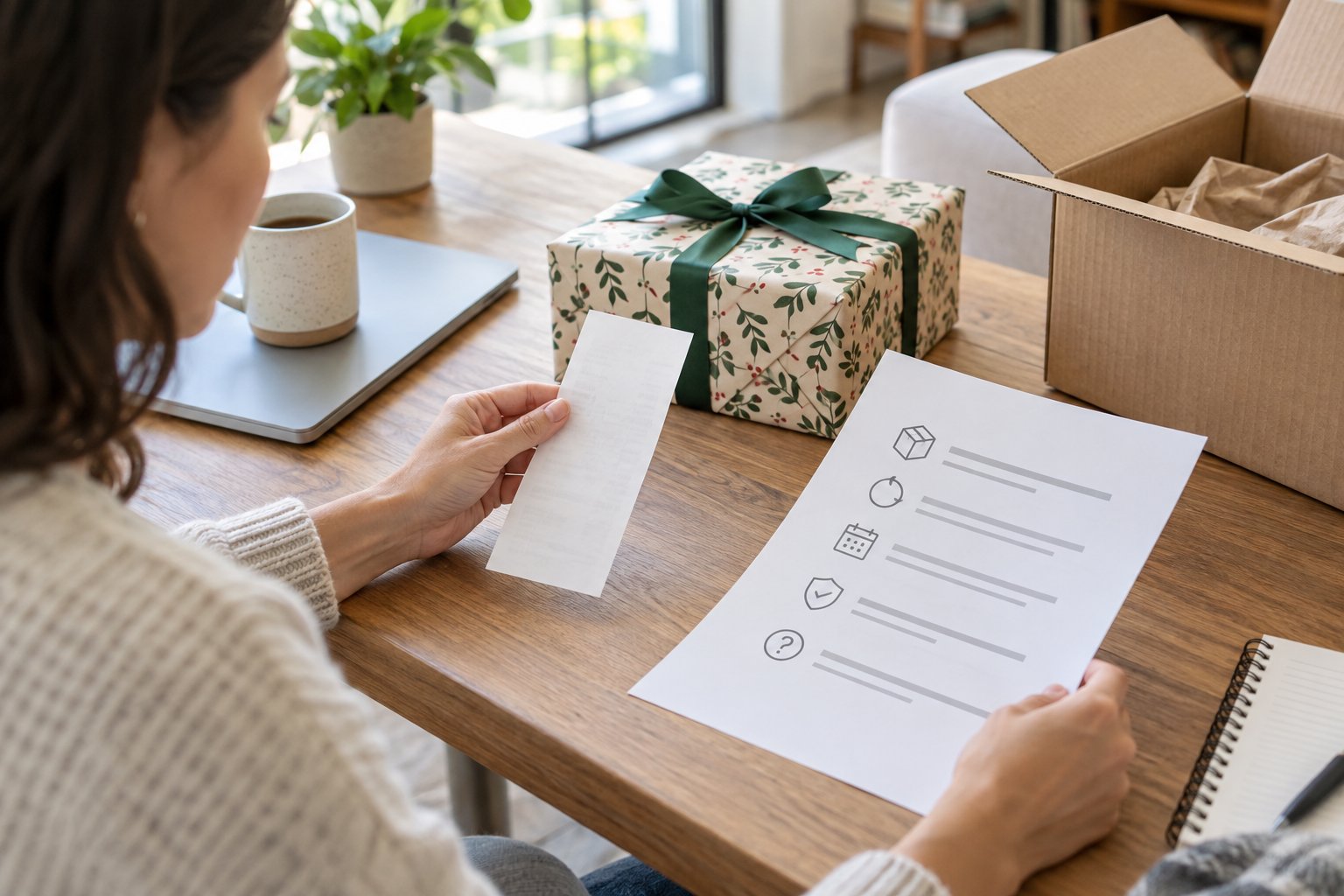
Ask for a receipt and business contact information. Check the relevant return, exchange, or repair process before paying, particularly for a gift. Find out whether the seller has a website or a regular location rather than assuming you can return to the same booth next week.
If you order something for later delivery, retain the specification, total amount, and expected dispatch plan. A social-media username alone may be an inconvenient way to manage a costly order.
7. How should I get it home?
Consider the journey left in your day. A fragile vase may need more protection than a paper bag if you will travel by bus or continue through a crowded market. Ask about suitable wrapping or whether collection later in the day is possible.
Check the full cost before agreeing to delivery. If the item is too large to carry safely, leave it with the seller until you have a clear collection arrangement.
Give yourself permission to leave a piece behind when the practical details don't work. Supporting a maker is most satisfying when the object also fits your life.
Cover: AI-generated editorial illustration, not a photograph of a specific retailer product.
Did this guide help?
Your optional support helps PeekBlue research and publish practical guides that remain free for everyone.
Support PeekBlue One-time support. Articles stay free.