
How to Choose a Handmade Gift Someone Will Actually Use
Choose a handmade gift that fits someone's daily routine. Check dimensions, materials, care, storage, and delivery before placing an order.
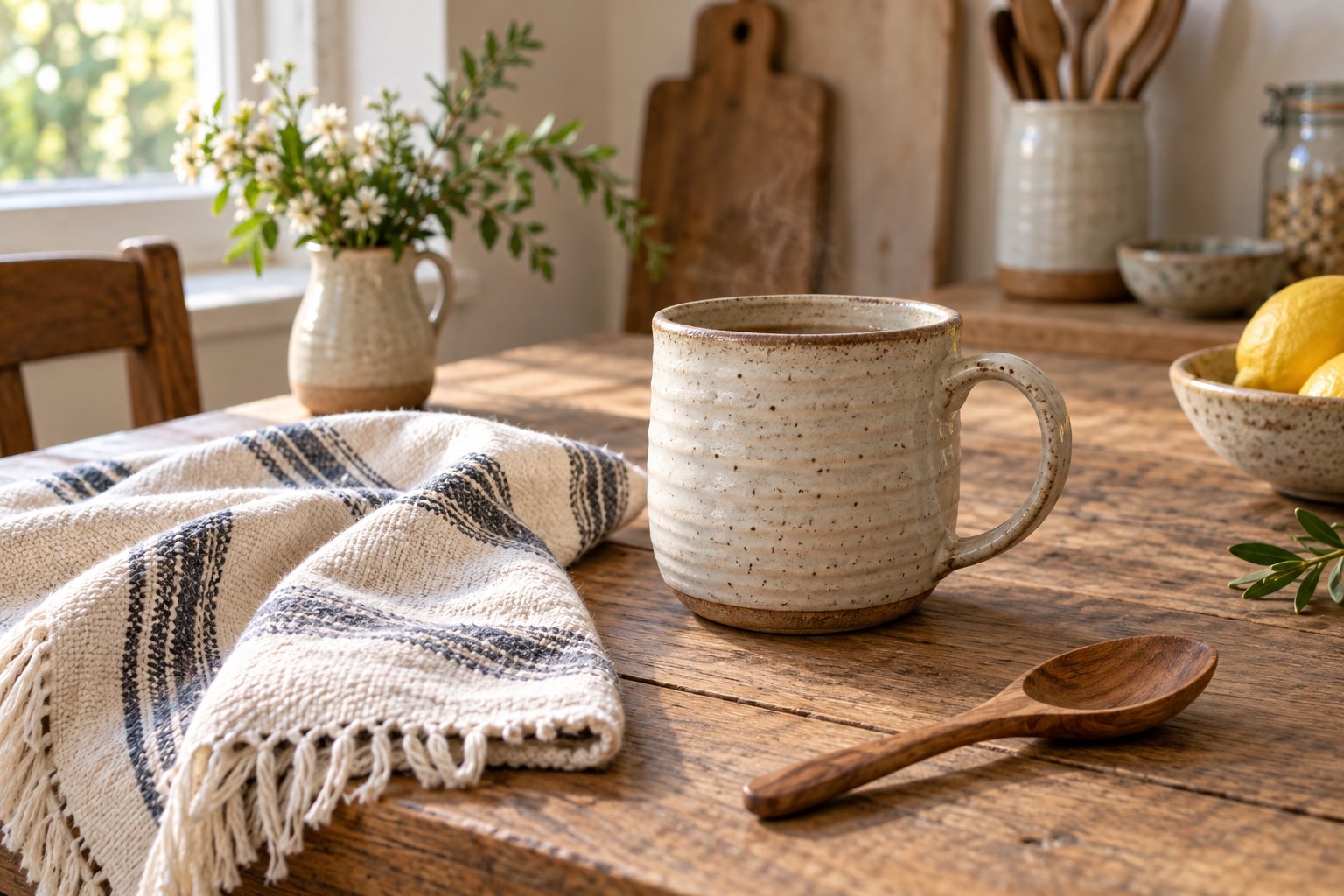
A useful handmade gift fits a routine the recipient already has, in a size and material they can live with. Choose the job it will do before you choose its decoration. Then check how it feels, how it is cleaned, and where it will be kept.
Handmade objects can have small variations that make them appealing. Those variations don't excuse a rough handle, an unstable base, or unclear care instructions. The aim is to find something the person reaches for after the gift wrapping is gone.
Start with one ordinary moment
Think about the recipient making coffee, packing a bag, cooking dinner, or setting down their keys. What object do they use in that moment? What is awkward about it?
Someone with a favorite oversized mug might value a replacement that holds the same amount. A smaller cup with beautiful glaze could be the wrong gift. A person who lives in a small apartment might appreciate a compact textile more than another decorative bowl.
Write one sentence: “This will help them do ___.” If the blank only contains “admire my taste,” keep looking. Our desk-gift guide applies the same test to limited workspaces.
Match the dimensions to something they already use
Product photos rarely show scale as clearly as measurements. Check a bowl's diameter and depth, a pouch's usable opening, or a scarf's length. Compare the numbers with a similar object the person owns, if you can do so without intruding.
For a bag insert, the outside size isn't enough. The lining, zip, and seam allowances can reduce the space inside. For a mug, ask about capacity and the handle opening. These details matter more than whether a listing calls the item generous or compact.
If you can't check dimensions, choose a category with fewer fit requirements. A small decorative piece still needs somewhere to live, but it won't require you to guess a wrist or clothing size.
Ask what everyday care actually involves
A kitchen gift should fit the way the household cleans up. Ask the maker whether a ceramic item is intended for food use and what washing or heating instructions apply to that exact piece. Don't infer suitability from the word pottery or from a photograph of food beside it.
For textiles, check fiber content and washing instructions. For wood, ask about the finish and recommended care. These are questions to settle with the maker, not assumptions you can make about every handmade object.
If the recipient dislikes maintenance, a gift requiring frequent special treatment may become another task. Include the maker's care card so the recipient doesn't have to track you down for instructions later.
Separate attractive variation from a practical problem
A slightly uneven glaze or changing wood grain can be part of the design. A lid that won't close or a sharp unfinished edge affects use. Ask whether the photo shows the actual piece you will receive or a representative sample.
On Etsy, the seller policy calls for accurate information about how items are made and sets listing-image requirements. That gives you useful questions to ask; it doesn't mean every item on a marketplace has been personally inspected by the platform.
At a market, handle the object with permission. Put it down again and watch whether it rocks. Open the clasp or zipper. Read our craft-fair buying questions before shopping in person.
Check taste without turning the gift into homework
Look for colors and materials the recipient already chooses. A handmade item doesn't have to be unusual to be thoughtful. A quiet design may be easier to use every day than a bold motif that fits only one room.
Avoid asking them to invent the whole gift unless you are deliberately offering a commission. A simple question such as “Would you use a larger mug or another travel pouch?” can resolve more uncertainty than a long conversation about style.
Personalization can wait until the base object is right. Our personalized versus ready-made comparison helps decide whether a permanent detail adds value.
Make delivery and handover part of the choice
Check whether the piece is ready to ship, made to order, or awaiting a custom approval. If it is fragile, ask how it is packed and what the seller wants you to do if it arrives damaged. Keep the packaging until you have inspected the item.
Before paying, confirm the final item, dimensions, care requirements, delivery destination, and the relevant return terms. If a key detail remains unanswered, choose another piece. A useful gift should arrive with enough information to be enjoyed immediately.
Cover: AI-generated editorial illustration, not a photograph of a specific retailer product.