
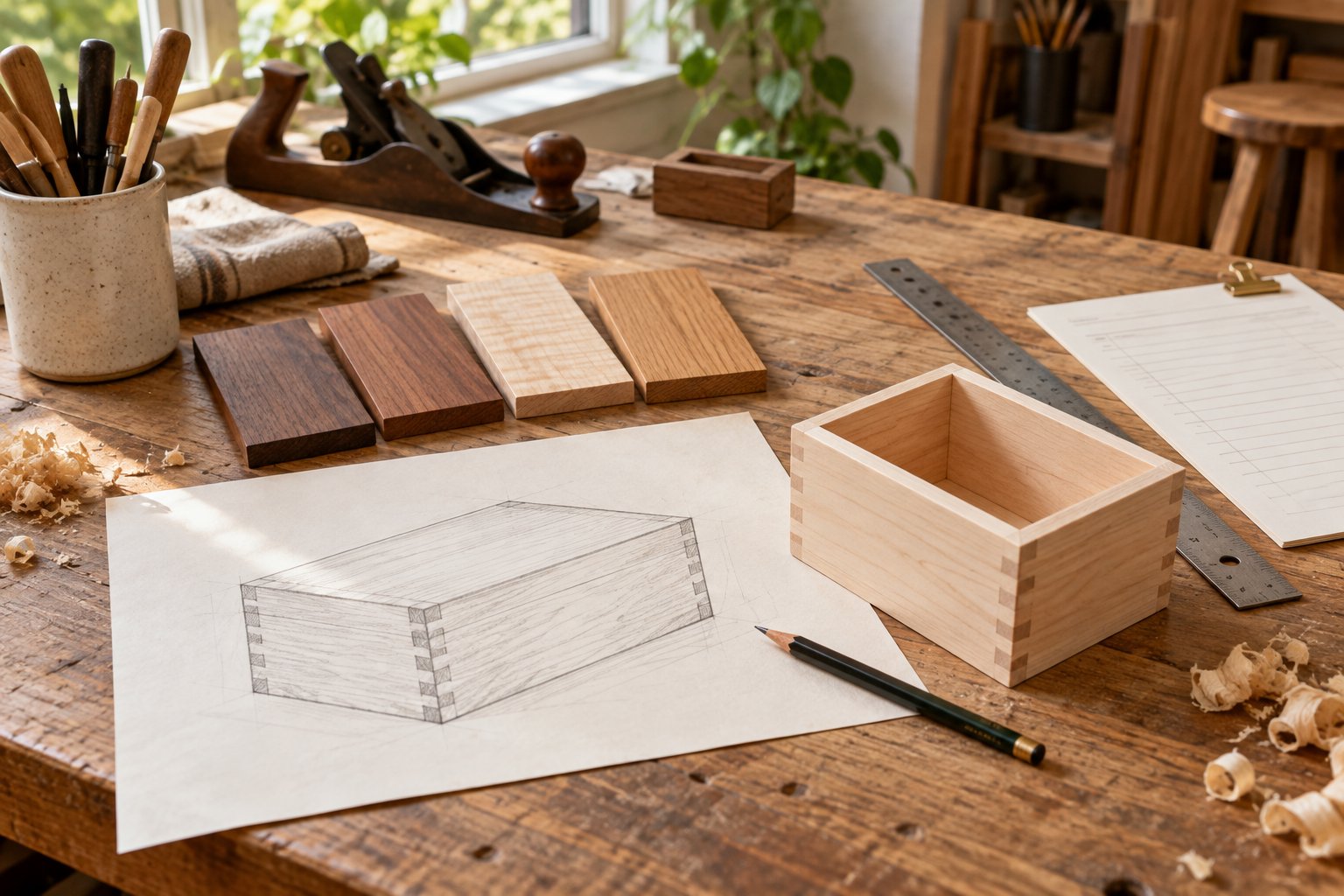
Before starting a custom order, turn the conversation into one written specification the buyer can approve. State what you will make, what the price includes, when decisions are due, and how changes will be handled. Start irreversible work only when the agreed approvals and payment conditions are met.
This is a practical order-planning checklist, not a universal contract. Your terms must also fit the rules of your sales platform and the requirements that apply where you sell. A clear record helps both sides understand the purchase.
1. The exact item and its intended use
Describe the quantity, dimensions, materials, finish, and any personalized wording. If the buyer wants a box to hold a particular object, record the usable inside dimensions as well as the outside size.
Agree on the intended use when it changes the design. A decorative bowl and a bowl intended for serving food need different questions answered. Avoid accepting a vague request such as “make it suitable for anything.”
Reference photos can explain an idea, but don't promise to copy another maker's protected design. State which features you can offer in your own work and which details remain illustrative.
2. The version the buyer is approving
Send one clearly identified drawing, sample, or written description for approval. Include the actual lettering rather than a placeholder name. If the specification changes, issue a revised version so there aren't several conflicting approvals in the message thread.
Explain natural variation where it matters. Wood grain, glaze, or hand-dyed fabric may differ from a sample. Ask the buyer to acknowledge the expected type of variation without using that explanation to excuse a different size or missing feature.
Keep the final approval with the order record. “They liked the photo” is less useful than a confirmation of the exact specification.
3. The total price and payment stages
State the price of the item and any separately charged design, packaging, or shipping work. Explain which decisions could change the quote and how long the quote remains valid if your material costs are changing.
If your process uses staged payments, explain what each payment covers and when it is due. Don't assume the word deposit answers questions about cancellation or refunds. Make those terms explicit and consistent with applicable rules.
For Etsy orders, use the platform's supported custom-order process and current seller policy. Our handmade pricing guide helps account for design and communication time before you quote.
4. What counts as a change
Define the number and scope of revisions included before production. Changing a spelling before engraving is different from changing the size after cutting the material. Tell the buyer when each decision becomes difficult or expensive to reverse.
If a new request changes the price or delivery plan, send the revised proposal and wait for agreement. Don't quietly perform extra work and surprise the buyer with an invoice afterward.
Likewise, don't absorb repeated additions without checking whether the order still makes sense. A clear change process is useful even when the customer is a friend.
5. The schedule and what it depends on
Separate approval, production, dispatch, and expected delivery. State whether your production period starts after payment, material arrival, or final approval. Agree on what happens if the buyer takes longer to approve a design.
Ask about the occasion date before accepting a rush request. Check your actual capacity and supplier availability. Faster postage cannot solve a production schedule that was impossible from the start.
For seasonal work, our personalized gift planning guide shows buyers how these stages fit together.
6. Delivery, collection, and the finished handover
Confirm the destination and whether the piece will be shipped or collected. For bulky work, discuss access and what the delivery service includes before building something the buyer can't move into place.
Explain how you will pack fragile items and provide any care or assembly instructions. Our packaging guide for handmade products covers practical packing choices.
If you send a completion photo, explain what the buyer is approving at that stage. A photograph can show visible details, but it doesn't replace checking dimensions or workmanship yourself.
7. Problems, cancellations, and corrections
Explain how the buyer should report damage or a mismatch with the agreed specification. Keep ordinary change-of-mind requests separate from a product that arrives damaged or differs from what you promised.
Set out your cancellation process and any relevant stage boundaries. Avoid blanket wording that suggests your shop policy overrides mandatory consumer rights. For a costly or unusual commission, get suitable professional help with the terms.
Before beginning, send a short recap and ask for approval: the final specification, total price, payment stages, production start, dispatch plan, and included revisions. Making the agreement easy to read is part of making the custom order manageable.
Cover: AI-generated editorial illustration, not a photograph of a specific retailer product.
Did this guide help?
Your optional support helps PeekBlue research and publish practical guides that remain free for everyone.
Support PeekBlue One-time support. Articles stay free.