
Air Fryer or Toaster Oven? What Makes Sense for a Small Kitchen?
Compare an air fryer and toaster oven on usable capacity, counter space, cooking habits, cleanup, and which appliance you would use most.
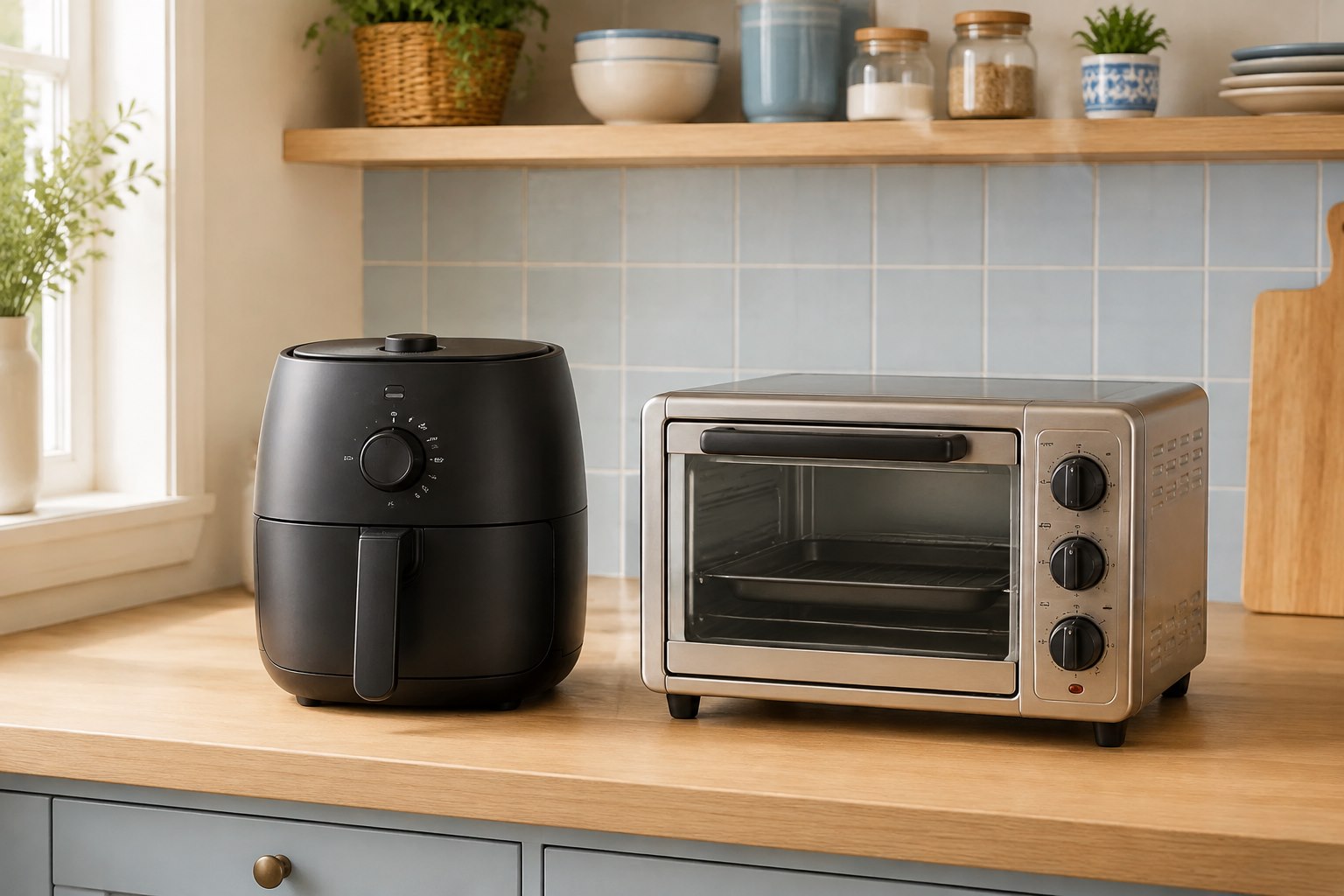
Choose a basket air fryer if your main task is cooking small batches of foods that benefit from hot circulating air and you prefer a pull-out basket. Choose a toaster oven if you regularly want a flat tray, toast, or room for different bakeware. Measure usable cooking space and operating clearance before comparing advertised capacity.
Some toaster ovens include an air-fry setting, so these categories overlap. Compare the actual appliance and the meals you make rather than assuming the name tells you how well it will fit your kitchen.
Start with the food, not the function count
Write down five meals or snacks you expect to prepare. Consider their shape as well as quantity. A wide slice of pizza, several pieces of toast, and a small batch of vegetables create different space requirements.
A basket can be convenient for food you turn or shake during cooking. A tray-style oven can suit food that needs to stay flat or a dish you want to slide onto a rack. Either design may require more than one batch if you overcrowd the available area.
Don't assume a long list of presets removes the need to watch food or follow instructions. The useful question is whether the controls make your repeated tasks easy. Two familiar modes can matter more than a dozen programs you'll never use.
Compare usable area rather than headline capacity
Quarts, liters, slice counts, and “serves a family” descriptions don't directly compare with one another. Look for basket dimensions, tray dimensions, and internal height. Check whether those measurements include handles or parts that reduce usable space.
For example, a tall basket may hold a large volume but offer limited area for a single layer of food. A shallow toaster oven may accept a wide tray while excluding a deeper baking dish. Neither measurement is inherently better; it depends on the meal.
If you already own bakeware, measure it including handles. Don't assume a dish fits because its stated diameter is smaller than the oven's external width. Rack position and clearance around the dish also matter.
For two people, consider whether you want the main dish and a side ready together. Two cooking zones can help with some menus, but they take space and still need compatible cooking instructions. Compare that with cooking one item on your existing stovetop.
Measure the space the appliance needs while working
Mark the appliance's footprint on the counter with a piece of paper. Include the space needed to open its door or pull the basket out. Check the distance to cupboards and walls against the exact model's instructions.
The manufacturer's manual is the right source for clearance and electrical requirements. For example, Ninja's official manual library separates guides by model. Use the matching guide rather than borrowing a clearance number from a review of a different appliance.
Find a suitable outlet before buying. Follow instructions on extension cords, placement, and surfaces. Avoid planning to operate a hot appliance inside a cupboard or in a position that blocks ventilation.
If you intend to store it after each use, check weight and where it will cool first. A machine that technically fits in a cabinet may be too awkward to move twice a day. That can turn a space-saving plan into a permanent countertop occupation.
Look closely at cleanup
With a basket model, check which components separate and how food or grease can collect around them. With a toaster oven, inspect the tray, racks, door, and crumb tray. Ask whether you can reach the areas that will need regular cleaning.
Read the cleaning instructions before placing parts in a dishwasher. A removable part isn't automatically dishwasher-safe. Check whether replacements are sold for the basket, rack, or tray you are most likely to wear out.
Think about your sink too. A large tray that barely fits may be annoying to wash in a small apartment kitchen. Compare the cleanup after one ordinary meal, not just the appealing photo of the appliance when new.
Will it replace something you already own?
A toaster oven might replace a separate toaster for some households. A basket air fryer may become an additional appliance rather than a replacement. List what you would actually remove from the counter.
Don't automatically replace a working appliance because a new model combines several functions. First ask whether your current equipment already prepares the meals satisfactorily. Borrowing an appliance, when practical and permitted by its owner, can reveal whether the format fits your routine before you commit.
Avoid assuming either category always reduces energy costs. Power draw, cooking time, batch size, and the appliance you would otherwise use affect the result. Without comparable measurements for your situation, treat energy savings as an open question.
What should you check before paying?
- Exact basket or tray dimensions and the largest meal you intend to cook.
- Safe operating space, including the open door or basket.
- Cleaning instructions and availability of replacement parts.
- Controls you can comfortably see and operate.
- Return terms, especially for an appliance you've used with food.
Don't add accessories until you've checked what's included and what the manufacturer permits. A bundle of liners, racks, and pans can erase a price advantage while using more storage space.
A practical choice for three common routines
For someone who mostly reheats small portions and cooks basket-friendly foods, a compact basket model is worth comparing. For someone who makes toast daily and uses small baking dishes, start with toaster ovens. For a household already using its main oven comfortably, buying neither may be the best decision.
Keep the final choice tied to your own five-meal list. If one model handles four of those meals conveniently and fits the counter safely, that is stronger evidence than a larger feature count.
For another small-kitchen decision, see spice jars versus a spice rack. The goal is a kitchen that is easier to use, with enough working space left after the purchase.