
Where to Sell Handmade Pottery: Choosing the Right Marketplace
Compare Etsy, MakerPlace, and Amazon Handmade for pottery, with practical checks for stock, product descriptions, packaging, and shipping costs.
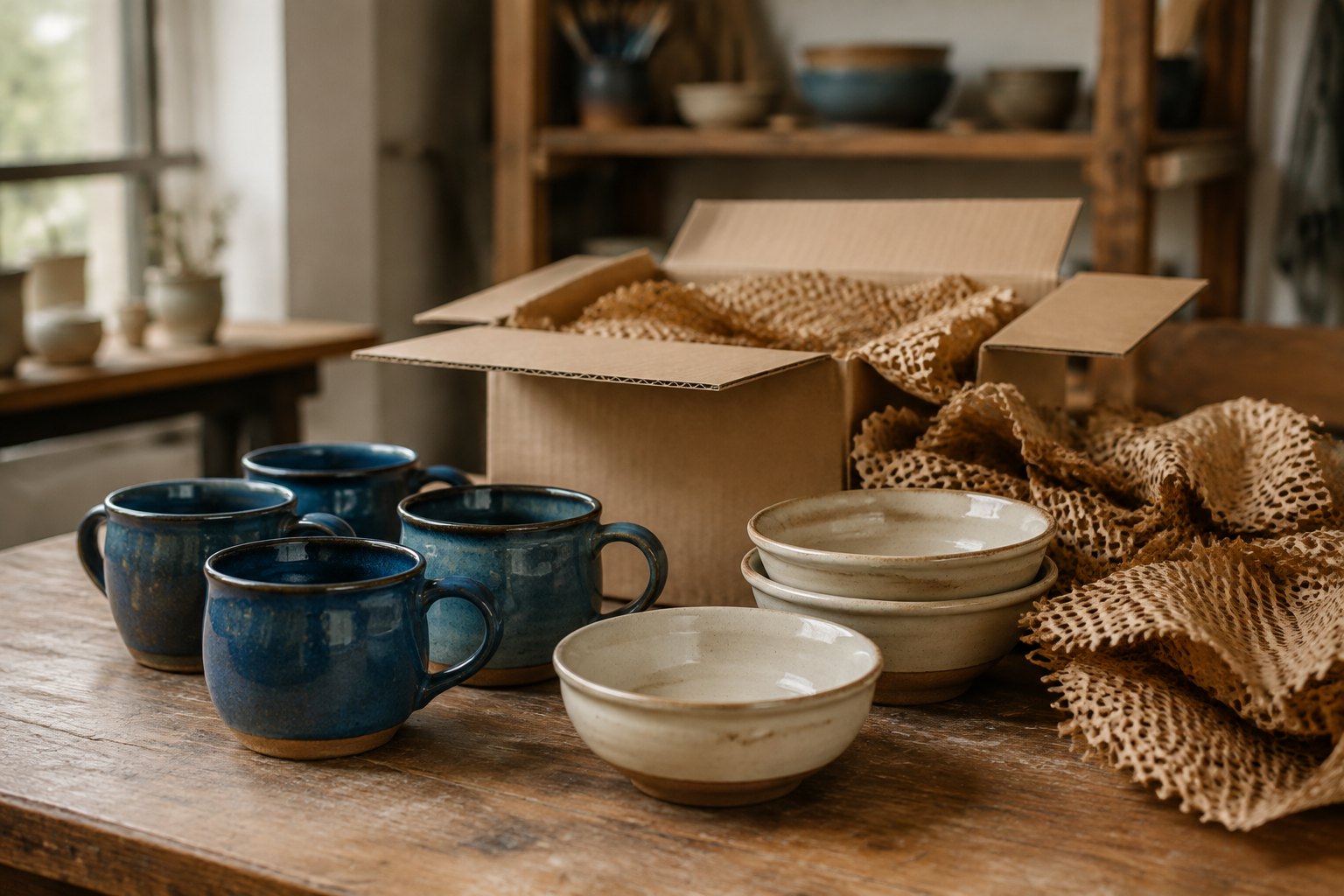
For handmade mugs, bowls, vases, and similar ceramic goods, compare Etsy, MakerPlace by Michaels, and Amazon Handmade. Start with one channel and a small batch you have already finished and inspected. Shipping, breakage, and the time needed to pack an order belong in the decision from the beginning.
Pottery has a practical complication: the item that leaves the kiln is not always the item you expected to list. Glaze variation, shape changes, and pieces that fail your quality check affect what you can promise. Selling available work first makes those uncertainties easier to manage.
Begin with the kind of pottery you want to sell
A one-of-a-kind vase, a repeatable mug design, and a custom dinnerware set create different workloads. Decide which offer you can keep clear and reliable alongside studio work.
For a first collection, choose a small group with shared materials, colors, or purpose. You might offer six finished mugs in one glaze family, each accurately photographed, instead of promising a large made-to-order catalog.
Distinguish exact-item listings from representative photographs of a repeatable design. If the customer will receive a similar piece rather than the pictured one, explain the variation honestly. “Handmade variation” should help buyers understand the product, not conceal significant differences.
Etsy: compare it for a distinctive, manageable collection
Etsy's product rules include physical items made by the seller. For a potter, the practical task is to turn each piece into a clear offer with accurate dimensions, materials, photographs, and dispatch information.
We would investigate Etsy when you can describe a recognizable collection: small bud vases, individually thrown coffee mugs, or handmade serving bowls. These are examples of focused offers, not predictions about which items will sell best.
Read the fee policy and estimate the charges on a normal order, including shipping you collect. Keep the price of a single mug realistic after its own box, packing material, postage, and handling time. A product can be appealing and still be uneconomical to send individually.
MakerPlace: another handmade marketplace to compare
MakerPlace is a candidate for a small handmade ceramics collection. Its seller offer includes free registration and listings, while sales still incur applicable fees. Read the store setup guide for eligibility, approval, and the current onboarding process.
Compare the cost of a completed order using the seller agreement. The Standard plan's transaction charge and the separate processing charge both matter; concentrating on free listings alone gives an incomplete picture.
This is worth considering when the collection is ready and you want to evaluate a handmade-focused selling channel. Use a manageable number of products so you can keep availability accurate without repeatedly interrupting studio work.
Amazon Handmade: investigate it after your process is dependable
Amazon Handmade requires approval and includes categories such as Home and Kitchen & Dining. Check the eligibility of the actual item and the current seller costs before applying.
We would put this option later in the comparison if you are still learning how many saleable pieces each firing produces. It becomes more practical to assess once you have dependable stock, established packing, and a dispatch routine you can maintain.
A consistent product description does not require identical handmade objects. It does require that customers can understand the size, finish, and variation they are buying. List only the quantities you can supply within the stated time.
Choose between single pieces and sets
Sets can spread some order-handling work across several items, but they also create different packing and replacement problems. Two mugs need protection from each other as well as from the outside of the box. A four-piece set needs all four pieces to pass your quality check.
Calculate the packed weight and dimensions for both a single item and a set. Get real shipping estimates for the destinations you plan to serve. Do not assume that doubling the product count only doubles postage or that a set automatically makes more money.
Consider the buyer's problem too. A person buying one gift may prefer a single mug. Someone furnishing a kitchen may want a coordinated set. Offer a set because you can supply it well and it makes sense for the product, rather than simply to raise the order total.
Give buyers useful measurements and care information
For a mug, list dimensions and a measured capacity, distinguishing a comfortable fill level from brim capacity where relevant. For a bowl, diameter and height are more useful than “medium.” For a vase, include the opening size if it affects how it can be used.
Describe the material and finish accurately. Only claim food-contact suitability, microwave use, dishwasher use, or oven use when you have an adequate basis for that claim for the finished product. A decorative ceramic object should be described for its intended decorative use.
Provide care guidance you can support for your materials and process. If you are uncertain about a safety or performance claim, resolve it before listing; a marketplace's general eligibility does not establish that a particular piece meets a particular use requirement.
Build a packing routine you can repeat
Prepare the box, cushioning, and separators before your first sale. Pack a representative piece, then measure and weigh the complete parcel. Use the carrier's current guidance and the platform's packaging requirements for the type of item you ship.
Photograph the finished piece before packing and keep the documentation your carrier or platform requires. Have a plan for a customer reporting damage, including how you will respond through the marketplace's process.
Count packing time as work. If one order takes twenty minutes to prepare, twelve orders require four hours just for that stage. This simple workload example helps explain why a sudden increase in sales may require a change in dispatch promises.
Make room for imperfect production days
Set quantities from inspected stock, especially at the beginning. For made-to-order work, allow for the actual production stages and a reasonable margin for problems instead of promising the shortest possible turnaround.
Keep a few notes after each batch: usable pieces, total studio time, packing time, damaged deliveries, and repeated customer questions. These observations help you decide whether to adjust the product, packaging, or price.
If one shape is consistently awkward to pack and another is straightforward, that is useful business information. You can reserve the difficult piece for a different delivery arrangement where supported rather than forcing every design into the same online offer.
A sensible first move
Choose one marketplace, one small collection, and one packing method you have worked through. Publish accurate quantities and realistic dispatch times. Review actual costs and customer questions before adding a second channel.
For the broader comparison, see our guide to selling handmade products in the U.S.. A sustainable pottery shop should leave you time to make the next batch as well as fulfill the one you have sold.
Platform information checked September 5, 2026. The featured image is an AI-generated editorial illustration.