
A Simple Weekend Bag Checklist for a Two-Night Trip
Pack for a two-night trip with a practical checklist for clothing, toiletries, documents, and technology, plus checks for a manageable bag.
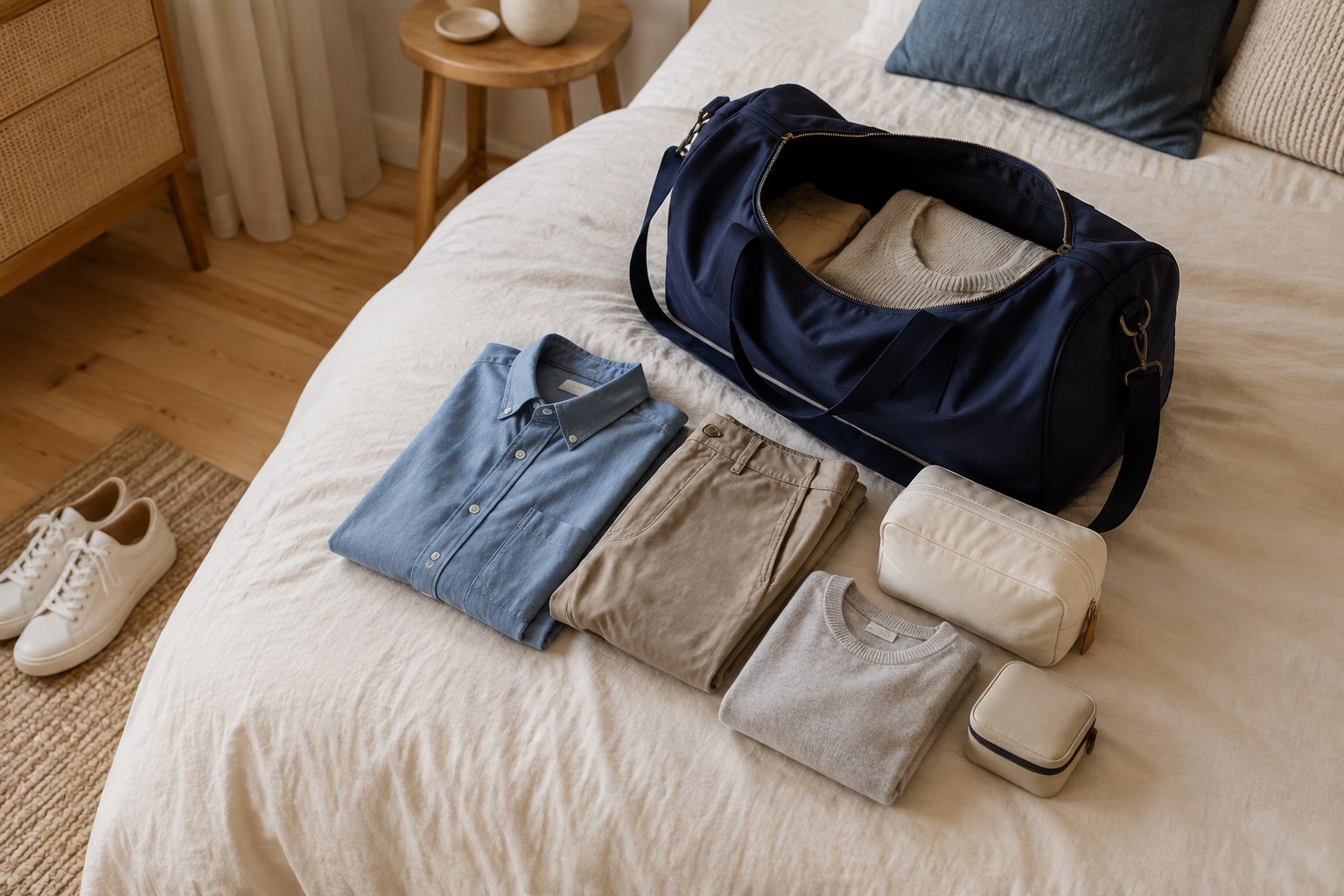
For a two-night trip, pack around the outfit you travel in, the activities you've actually planned, and the weather forecast. Start with two changes of underwear, the clothing needed for each remaining day, toiletries, medication, and your essential charger. Add specialist items only for confirmed plans, then check that you can carry the bag comfortably.
This checklist assumes an ordinary stay with indoor accommodation. Camping, a formal event, or a trip with specialist equipment needs a different list. Treat the quantities as a starting point, adjusting for weather, personal needs, and whether clothes can reasonably be worn again.
Before you open the bag
Check your departure and return times. Friday evening to Sunday afternoon creates different clothing needs from Friday morning to Sunday night, even though both trips include two nights away.
Confirm what the accommodation supplies: towels, toiletries, a hair dryer, or laundry access may change what you bring. Don't assume they're included because another property supplied them on a previous trip.
Finally, check the forecast for the activities, not just the destination city. An evening outside or an exposed waterfront walk may call for a different layer from an indoor afternoon. Pick the main shoes and outer layer before filling the smaller compartments.
The clothing checklist
Wear your travel outfit and pack what is needed to complete the remaining days. For a simple casual weekend, start with:
- Two changes of underwear, plus a spare if useful for your plans.
- Enough clean socks for the trip and planned activities.
- One or two tops that work with the bottoms you're bringing.
- One additional pair of pants, shorts, or a skirt if needed.
- Sleepwear.
- A layer for cooler conditions.
- Weather protection appropriate to the forecast.
You may already be wearing the layer or bottoms you intend to use again. Count them as part of the outfit plan instead of packing a duplicate automatically. If heat, exercise, or personal comfort means you won't rewear something, include that reality in the list.
Extra shoes deserve a specific reason. Formal plans, swimming facilities, or a different activity may justify them. “Just in case I feel like another pair” is a weaker reason when your bag is already difficult to close.
Toiletries and personal essentials
Pack your toothbrush and the products you normally need over a short stay. Include any contact-lens supplies, menstrual products, or other personal items relevant to you. Use familiar products rather than making the trip a trial of several new ones.
Keep medication and essential medical supplies accessible, with what you need to use them correctly. Follow the relevant instructions for storage and travel. A shorter holiday doesn't make a daily essential optional.
Use containers that close securely, and isolate anything that might leak from clothing and electronics. A half-empty large bottle still takes up a large amount of bag space. Decant only where suitable and label the contents clearly so that similar containers aren't confused.
If you fly from a U.S. airport, check the TSA's current travel checklist and rules for your items. Ordinary carry-on liquids are generally limited to containers of 3.4 ounces or 100 milliliters in a quart-sized bag, with exceptions for certain needs. Confirm requirements for the airports and itinerary you're using rather than relying on a generic packing tip.
Documents, money, and technology
Keep identification, the payment methods you'll use, reservation details, and relevant tickets where you can retrieve them without unpacking. Save key addresses and arrival instructions in a form you can access if mobile service is unreliable.
Bring the phone charger and cable that work with your device. Add other electronics only for a planned use. A laptop may be necessary for work; it needn't accompany every weekend simply because it fits in the bag.
A power bank is optional if you expect long periods away from an outlet. For flights, the FAA says power banks and spare lithium batteries belong in carry-on baggage. Remove them if your bag is checked at the gate, and check airline limits and handling requirements. Keep the battery protected from damage and short circuits.
Add one small module for each real activity
A swim means swimwear and whatever the facility doesn't provide. A dinner with a dress code means one outfit that meets it. A planned walk may mean appropriate footwear and weather protection. Pack for the actual event, then remove any overlapping item that no longer has a job.
Avoid packing several imagined versions of the same afternoon. If you haven't decided whether you'll hike, visit a gallery, or spend the day shopping, settle the main plan before preparing for all of them.
One optional activity can be easy to accommodate when it uses what you're already bringing. A casual local walk may need no additional clothing. Choosing flexible plans can reduce the pressure to carry specialist items you may never unpack.
Pack in the order you'll need things
Keep arrival essentials near the opening: directions, medication you may need en route, a weather layer, and any required documents. Put items you won't need until bedtime deeper in the bag.
Group small accessories in a pouch you already own. Packing cubes are optional; their value is organization, and they still occupy space. Use a separate washable bag for worn clothing so you can find the clean items without sorting everything on the bed.
Don't judge the bag only while it's resting on the floor. Zip it without forcing the closure, lift it, and walk around briefly. If you'll use stairs or public transit, make that part of your assessment. For air travel, check the bag's packed dimensions and weight against your airline's allowance; “weekender” is a product label, not a baggage category.
The final five-minute check
Lay the outfit plan beside your itinerary and ask what each remaining item is for. Remove duplicates where one item comfortably does both jobs. Leave space for the layer you'll take off during the journey.
Then check the easy-to-forget essentials: identification, medication, keys, phone, charger, and any required tickets. Set a reminder for the items still in use on departure morning.
Your bag is ready when it supports the weekend you've planned and is manageable to carry. There is no prize for the smallest possible bag if it leaves out something you need, and no benefit to filling spare space simply because it is available.