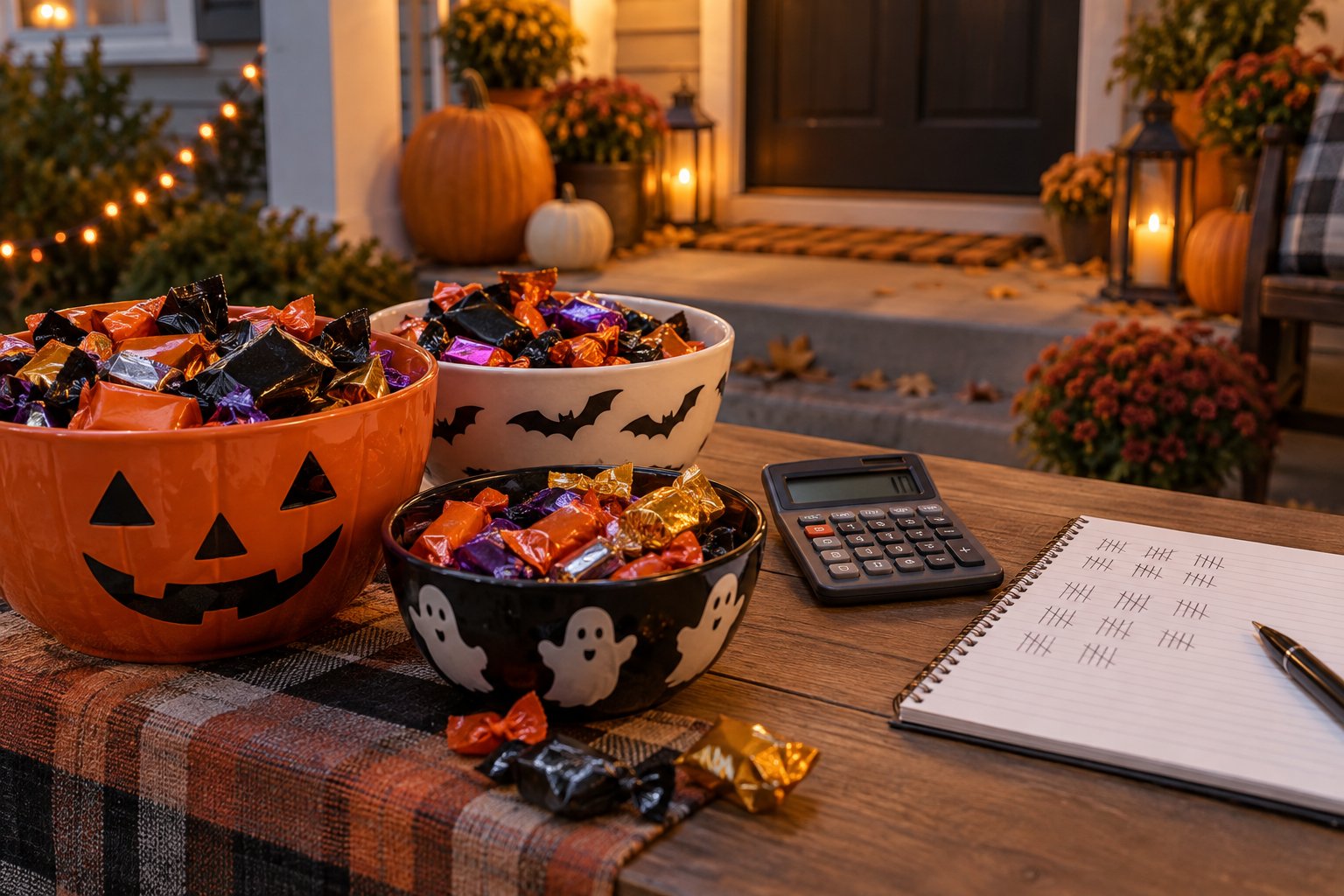
Estimate Halloween candy by multiplying expected trick-or-treaters by the number of pieces you plan to give each visitor, then add a 10% buffer. Convert the total pieces into bags using the piece count printed on each package. This works better than buying a familiar number of bags because package sizes vary.
Candy is central to the holiday. The National Retail Federation's 2026 Halloween survey found that 96% of Halloween shoppers planned to buy sweets. Your street may be busy or nearly empty, so local information matters more than a national average.
Use last year's visitor count when you have it
Write down how many visitors arrived and the hours when traffic was busiest. If you did not count, ask a nearby household that participated. Apartment buildings, cul-de-sacs, organized neighborhood events, and streets without sidewalks can have very different patterns.
Adjust the estimate for known changes. A new community event may concentrate visitors in one place. Poor weather can reduce foot traffic. A Friday or Saturday celebration may run later, but do not treat the day of the week as a guaranteed multiplier.
If this is your first year in the home, choose a conservative estimate and keep a backup option rather than buying for an imagined crowd.
Decide the serving before calculating
Choose one, two, or three pieces per visitor based on the size of the candy and your budget. Put that serving in your hand. If the pieces are tiny, one may feel different from a standard fun-size item.
Use this formula:
Expected visitors × pieces per visitor × 1.10 = pieces to buy
For example, 80 expected visitors at two pieces each gives 160 pieces. Adding 10% brings the target to 176 pieces. If a package contains about 90 pieces, two packages should cover that estimate. Check the package label because counts may be approximate and assortments vary.
Set a spending limit before comparing bags
The largest bag is not always the lowest cost per piece, and the lowest unit price is not useful when half the candy remains unwanted. Compare price per piece only after deciding the quantity range you need.
Include candy in the total plan from our Halloween budget guide. If the estimate exceeds the candy line, reduce pieces per visitor, shorten participation hours, or choose a less expensive assortment. Do not cut necessary household spending to match the busiest house on the block.
Plan for allergies without making promises you cannot keep
Keep ingredient labels available and avoid stating that an item is safe for a specific allergy unless the manufacturer provides that information. Individually wrapped non-food items can offer another option, but they should be age-appropriate and free of small parts for young children.
Place alternatives in a separate container to reduce mix-ups. Let a caregiver read the original label when needed. Ingredients and manufacturing notices can change between products that look similar.
Choose candy your household can use afterward
If leftovers are likely, buy items your household can eat, share appropriately, or use in baking. Do not count on returning opened seasonal food. Check the store's return policy before buying an unusually large quantity.
Keep unopened backup bags separate. Open them only when the main bowl runs low. This makes it easier to use the store's normal return policy if the neighborhood is quieter than expected, provided the item remains eligible.
Have a clear closing plan
Decide the participation window and turn off decorations or porch lights when finished according to local custom. Do not keep opening new bags in the final minutes just to maintain the original serving size. One piece per visitor is fine when supplies are low.
After the night, record visitors, pieces per person, unopened bags, and weather. Store that four-line note with the decorations. Next year's estimate will start with evidence instead of another guess.
If you are also buying decorations, compare storage and repeat use with our guide to reusable Halloween decorations. A planned quantity leaves more room in both the budget and the closet.
Did this guide help?
Your optional support helps PeekBlue research and publish practical guides that remain free for everyone.
Support PeekBlue One-time support. Articles stay free.