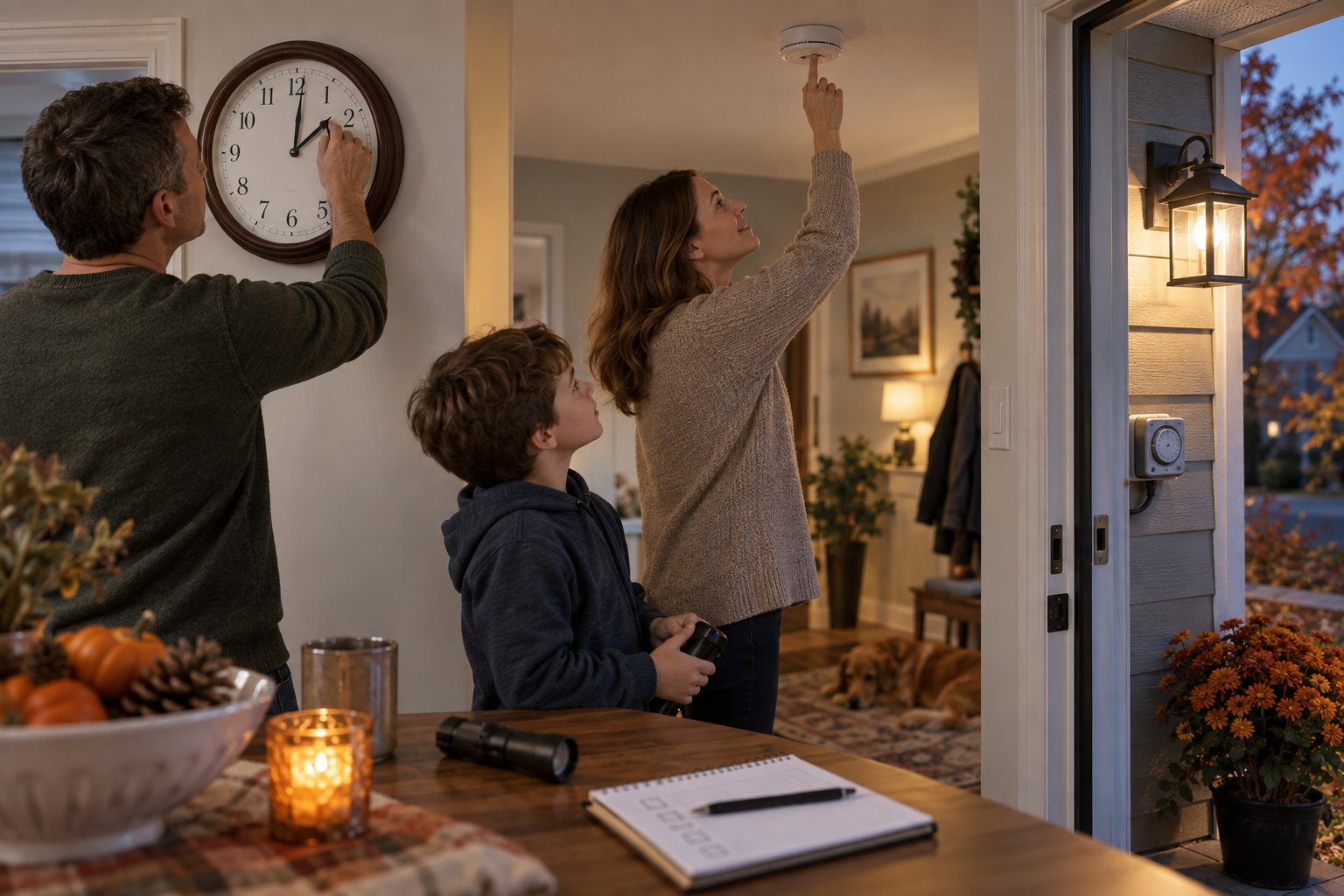
A safe Halloween costume lets the wearer see, walk, breathe, stay warm, and be noticed near traffic. Test the full outfit before October 31, including shoes, coat, makeup, mask, and props. A costume that works for five minutes indoors may fail during a cold, dark walk.
The U.S. Consumer Product Safety Commission recommends looking for flame-resistant labels, using bright or reflective materials, and making sure costumes fit well enough to reduce trips and falls. Its Halloween safety guidance is a useful final check for store-bought and homemade outfits.
Check vision and breathing first
Put on the mask in normal indoor light, then in a dimmer space. Can the wearer see the floor, people approaching from the side, and steps? Can they breathe comfortably and speak clearly?
Face paint may provide better peripheral vision than a full mask, but patch-test products according to their directions and keep makeup away from the eyes unless it is approved for that use. Remove it before bed. Do not use craft paint or products without clear cosmetic labeling on skin.
Glasses should sit normally under or with the costume. Do not build a costume that requires someone to remove needed corrective lenses.
Walk, sit, and use stairs in the complete outfit
Hemlines should clear the ground. Capes, tails, and oversized pants should not wrap around the feet. Test stairs while holding the intended candy bag or prop because free hands can hide a balance problem during the first fitting.
Shoes deserve more attention than the costume photo. Choose footwear that fits and has been worn before. Decorative shoe covers should not slide under the sole or conceal a loose fit.
If a child will ride in a car, remove bulky costume pieces before fastening the seat belt or child restraint. Put the costume back on after leaving the vehicle.
Plan for darkness and traffic
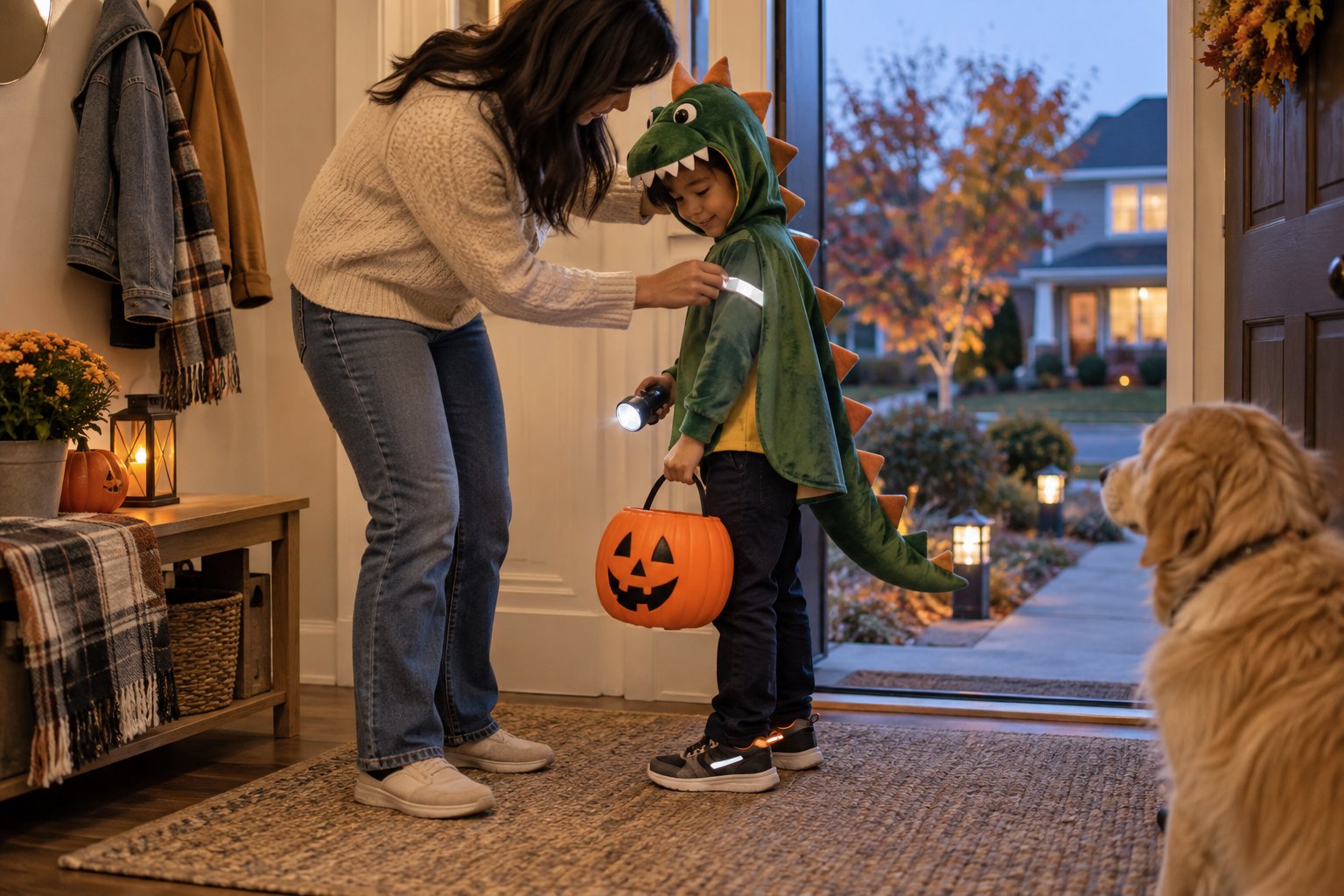
Add reflective tape, a bright bag, or a small light that does not depend on a phone battery. Test whether reflective pieces are visible from the front, back, and sides.
Review the walking route in daylight. Decide where the group will cross, who stays with younger children, and what time everyone returns. A costume does not replace normal pedestrian care. Drivers may have limited visibility, and excited groups move unpredictably.
Keep flames and heat away
The CPSC advises choosing flame-resistant costumes, wigs, and accessories. Flame-resistant does not mean fireproof. Keep flowing fabric away from candles, fire pits, space heaters, and cooking areas.
Use battery-operated lights in pumpkins and decorations when practical. If an event uses real flames, give them a wide, supervised area that does not overlap with a walking path.
Make props soft, short, and easy to carry
Swords, canes, and tools should be flexible and free of sharp points. A prop should not prevent the wearer from using handrails or holding an adult's hand. Leave it home if it becomes tiring after a short practice walk.
For inflatable costumes, read the manufacturer's instructions, keep the fan and battery compartment dry, and check that the wearer can hear traffic and voices. Plan how they will enter a restroom or vehicle without forcing the costume through a tight space.
Dress for the weather without breaking the plan
Check the local forecast on Halloween afternoon. Add a base layer rather than expecting a thin costume to provide warmth. If rain is possible, decide which parts can get wet and bring a simple outer layer.
Buying one size larger is not always the answer; excess fabric creates another hazard. Bring the warm layer when trying the costume so fit is tested with the real clothing underneath.
Run a ten-minute practice
Wear the outfit for ten minutes. Walk outside, sit, climb a few steps, carry the bag, and use the bathroom. Fix rubbing seams, loose fasteners, blocked vision, and trailing fabric now.
Keep a small repair kit at home with safety pins, tape, and spare batteries. A comfortable backup outfit is better than pushing through a costume that hurts or cannot be seen safely.
Complete the practical plan with our Halloween budget guide and pumpkin patch visit checklist. Safety checks are easiest when they happen before the schedule is crowded.
Did this guide help?
Your optional support helps PeekBlue research and publish practical guides that remain free for everyone.
Support PeekBlue One-time support. Articles stay free.