
7 Useful Gifts People Rarely Buy for Themselves
Choose a useful gift that fits a real habit. Compare seven practical ideas, who they suit, and what to check before buying.
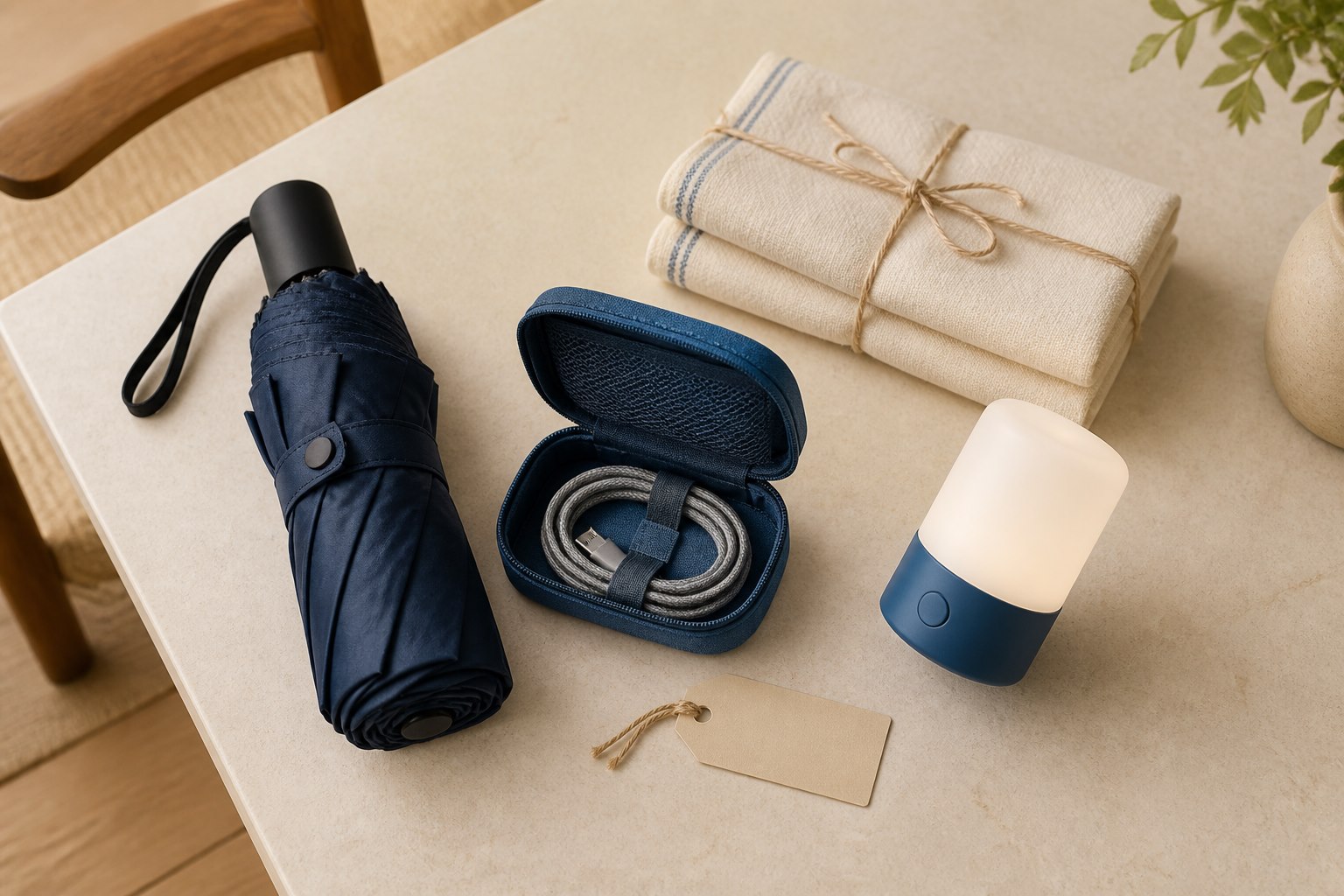
The strongest useful gift replaces a small annoyance your recipient has learned to tolerate. Think of the umbrella that turns inside out, the towel that never quite dries, or the charging cable that lives in the wrong room. An upgrade feels thoughtful when it fits an existing habit and can go straight into use.
These seven ideas focus on easy-to-postpone purchases. “Rarely buy” describes the kind of upgrade people may put off; it isn't a claim based on a shopping survey. The right choice depends on the person, and you don't need an expensive version to make it work.
Match the gift to a real habit
- Walks in unpredictable weather: a compact umbrella.
- Cooks meat or grills regularly: an instant-read food thermometer.
- Moves between home and work: a small cable organizer.
- Keeps worn kitchen textiles: a few good everyday towels.
- Works in awkward, dim corners: a compact task light.
- Runs out of phone battery away from home: a compatible power bank.
- Keeps meaning to fix something: a repair or maintenance gift arranged together.
Use the list to notice a fit, rather than to build a seven-item bundle. One well-chosen object is easier to appreciate and store than a box of loosely related accessories.
1. A compact umbrella they can actually carry
An umbrella earns its place when it fits the bag your recipient already uses. A large, sturdy model can be sensible for someone who drives everywhere, yet useless to a commuter who needs both hands free on a train. Start with the closed length and weight, then consider the canopy.
Look for a comfortable handle and a fastening strap that's easy to manage. If possible, try opening and closing the model in a shop. A tiny release button or stiff folding mechanism can turn a practical gift into something that stays by the door.
Best fit: someone who regularly gets caught without weather protection. Skip it: someone who already has a favorite umbrella or prefers a rain jacket. Include a gift receipt rather than assuming that a smaller umbrella is always a better umbrella.
2. An instant-read food thermometer
For a home cook, this can be a more useful present than another novelty utensil. It answers a specific question during cooking: what temperature has the food reached? Choose a readable display, a probe suited to the food they prepare, and controls they can use without opening a manual every time.
The USDA explains that appearance alone doesn't reliably establish safe doneness. A thermometer provides a measurement; the cook still needs the appropriate temperature guidance and correct probe placement. Link them to the USDA food thermometer guide, rather than presenting the device as a guarantee against mistakes.
Check whether the model is instant-read or designed to stay in food during cooking. Those uses aren't interchangeable. Best fit: someone who cooks and has mentioned uncertainty about doneness. Skip it: a recipient who rarely prepares the foods it would help with, or who already owns a thermometer they trust.
3. A small organizer for their actual cables
A cable pouch works when it holds a known collection: perhaps a phone charger, a short cable, and a pair of earbuds. It becomes extra luggage when you buy one with a compartment for every device a person might someday own.
Ask what travels with them. A flat pouch may fit a work tote better than a rigid case, while someone packing adapters and camera batteries might need a little structure. Check the opening: can they see everything without emptying the pouch onto a cafe table?
Leave some space instead of filling the gift with unidentified cables. Connector type, charging needs, and personal preferences vary. Best fit: someone who repeatedly transfers accessories between bags. Skip it: a person whose current bag already organizes those accessories well. A pouch should remove a daily search, not introduce a second place to search.
4. A few kitchen towels that suit their routine
Fresh everyday towels can feel surprisingly generous when the old ones have become thin, stained, or awkward to use. Before choosing a set, think about the job: drying dishes, drying hands, or wiping a counter. The most decorative option may not be the best match for any of those tasks.
Check the care label and choose a manageable quantity. Two or four useful towels make a clearer gift than a large bundle that takes over a drawer. A hanging loop matters if the kitchen has hooks; color matters if the recipient has deliberately kept the room simple.
Best fit: someone who enjoys cooking or has mentioned replacing household basics. Skip it: a recipient likely to read housework supplies as an assignment. Present the towels as an upgrade they wanted, not a hint about how their kitchen should look.
5. A compact task light for an awkward spot
Picture the job before choosing the light. Reading a label in a dark cupboard calls for something different from working on a bicycle or lighting a desk. A stable base, suitable beam, and accessible switch can matter more than a long list of lighting modes.
A rechargeable model avoids routine disposable-battery purchases, but it adds a charging task. Check the connector and whether a cable or power adapter is included. For a magnetic or clip-on light, confirm there's an appropriate place to attach it; a magnet doesn't make every surface usable.
Best fit: someone with a specific, recurring lighting problem. Skip it: someone who needs specialized equipment rather than a general household light. Don't choose an outdoor or workshop application without checking the manufacturer's conditions of use. Give it charged, where practical, with the instructions and accessories together.
6. A power bank chosen for compatibility
Start with the device and the day. A phone that needs a small afternoon top-up doesn't automatically call for the largest battery available. Weight, connector compatibility, and the cable the recipient carries will affect usefulness every time it leaves home.
Check the manufacturer's charging specifications instead of inferring performance from battery capacity alone. A port that physically fits doesn't tell you the full charging speed. Also confirm the product's condition and current recall status with its manufacturer before giving it.
For someone who flies, include a short reminder to check the airline's requirements. The FAA requires power banks and spare lithium batteries in cabin baggage, including removal from a bag checked at the gate. Best fit: a person who regularly runs short on power away from outlets. Skip it: someone who dislikes carrying extra weight and rarely needs backup charging.
7. Help paying for a repair they've already wanted
A repaired bag zip, refreshed pair of shoes, or serviced bicycle can be more welcome than a replacement. The key is consent. Mention the idea first, let the recipient choose the provider, and agree on what your contribution covers before making arrangements.
Avoid taking an item away as a surprise. They may need it that week, care about a particular repair method, or prefer to handle the conversation themselves. A note offering to cover an agreed service is often more flexible than a voucher tied to one location.
Best fit: someone who has specifically mentioned an unfinished repair. Skip it: an item whose owner hasn't asked for help or a service that might imply criticism. Keep booking, transport, and any remaining payment clear so the present doesn't arrive with unexpected work.
Check the gift's first day, not just its first impression
Before paying, imagine the recipient opening the package tonight. Where will the item live? Does it need an adapter, installation, special cleaning, or an account? Would using it require them to reorganize a room?
Choose the version that fits their routine with the fewest extra purchases. Keep the receipt, avoid personalization until you're sure about the item, and explain the specific habit that made you think of them. “For the charger you keep moving between bags” is a better gift message than a general promise to improve their life.