
7 Things to Check Before Buying a Gold Bracelet as a Gift
Buying a gold bracelet as a gift? Check size, karat, construction, clasp, everyday comfort, returns, and delivery before placing your order.
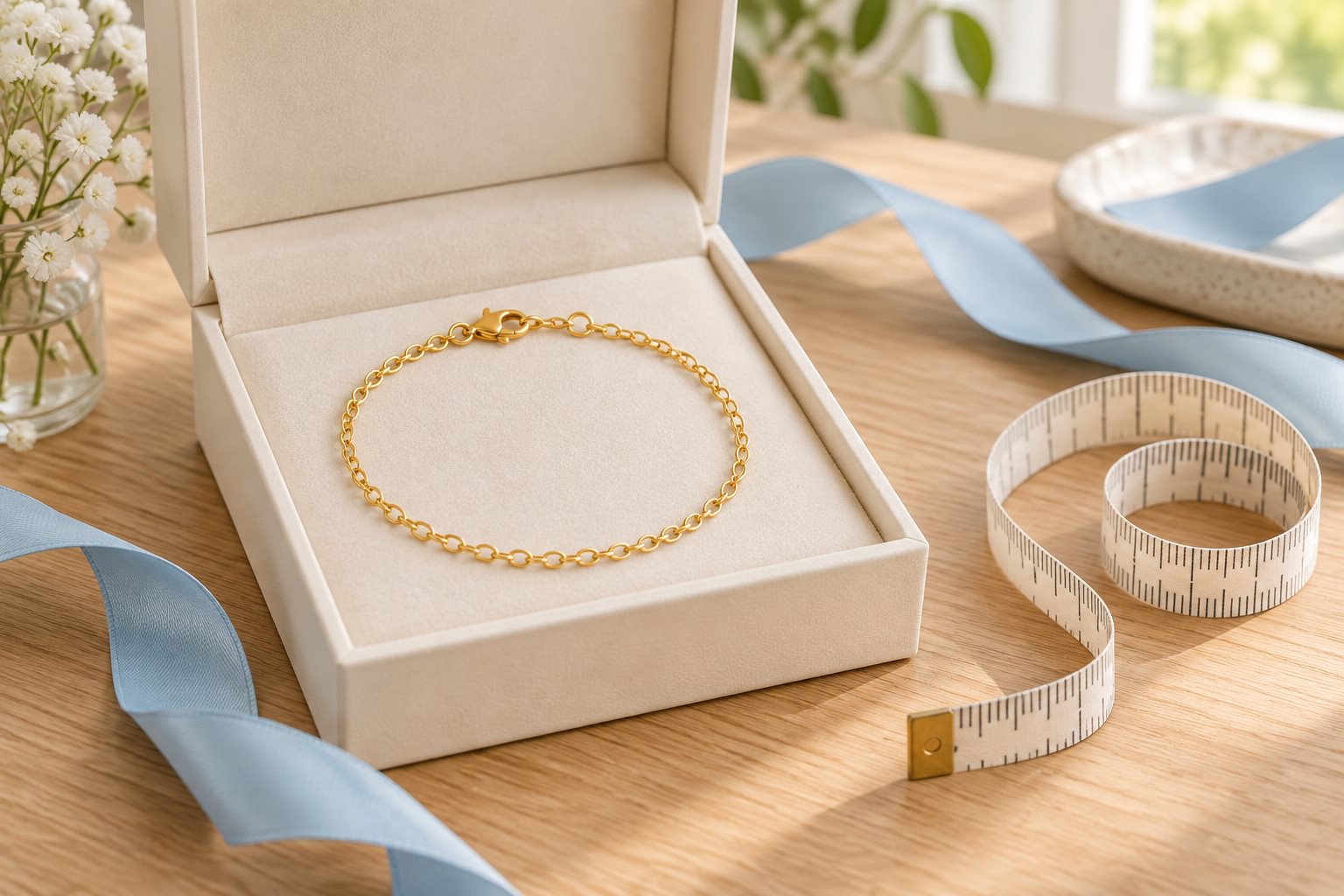
A gold bracelet can be a thoughtful gift, but the photograph won't tell you whether it fits or whether the recipient can fasten it comfortably. Start with their usual jewelry and a reliable size reference. Then check the piece's material, construction, and return conditions before choosing the packaging.
Shopping source: Visit RoseGold — rosegold.sa ↗
Browse gold jewelry at RoseGold. Confirm the item details and delivery availability with the store before ordering.
Use these seven checks to turn a broad search into a purchase you can explain. The cover is an AI-generated illustration; it does not show a product sold by RoseGold.
1. Match the bracelet to the way they dress
Look for a pattern in what the recipient already wears. A person who keeps the same fine chain on for dinners may prefer something lighter than someone who enjoys a large statement bracelet. Notice whether they wear a watch on the same wrist and whether their sleeves tend to sit close to the skin.
Don't confuse a design you enjoy looking at with one they would choose to wear. If you can't name a similar piece they own or a style they have mentioned, ask a small question about their preference. You can preserve the surprise without guessing every detail.
2. Get the right kind of measurement
A chain bracelet, a closed bangle, and a cuff do not use interchangeable measurements. Ask the seller which measurement the listing requires. For a chain, an existing bracelet that fits well can be a helpful reference. For a closed bangle, the opening must also accommodate the hand.
Measure in the units used by the listing and record what you measured: wrist circumference, total bracelet length, or inner diameter. A number without that label can create an expensive misunderstanding. If measuring an existing bracelet, check whether the seller's stated length includes the clasp.
Avoid treating a common size as a guaranteed fit. An adjustable design may provide some flexibility, but confirm its shortest and longest usable settings. Our advice is to resolve size uncertainty before buying, particularly if an alteration would change the return terms.
3. Confirm the karat and the material description
Read the complete description, including whether the bracelet is made from a gold alloy or has a gold coating. Ask the seller to put the material and karat on the invoice. If the recipient has a stated preference, match it unless they have said they are open to something else.
For the basic difference between two common options, see our 18K vs. 21K gold jewelry comparison. A higher karat is one feature of a gift, not a substitute for comfortable fit or a design the recipient likes.
4. Ask about weight and construction
Two bracelets can look similarly substantial in enlarged product photographs while feeling quite different. Request the weight, width, and thickness where available. Ask whether the links are hollow and whether any decorative elements are separate attachments.
If the listing gives an approximate weight, ask how much variation is possible and whether the final price changes with it. You don't need a technical lecture from the seller; you need enough detail to understand the item you will receive.
A simple side-view photograph or short demonstration may answer questions that a polished front image cannot. Asking for that detail is especially useful when you can't visit a branch.
5. Check the clasp and practical comfort
Ask for a close view of the closure. Consider whether the recipient could open and close it one-handed, whether it includes a safety feature, and what repair options exist if the clasp fails. Avoid assuming that a named clasp type is always easy for every person to operate.
Think about the wearer's routine. Large charms could catch on a sleeve; a thick bracelet may sit awkwardly beside a watch. These are questions to check against the actual design, not reasons to reject all decorative bracelets.
6. Read the gift's exit route
Before paying, check the return window, required packaging, and exclusions. Ask whether the recipient can exchange the item and whether the invoice must travel with the gift. If you arrange resizing or engraving, ask how that changes eligibility.
As a concrete example, RoseGold's published return and exchange policy includes a ten-day window subject to conditions, excludes certain special or modified orders, and says exchanges take place at its branches. Read the full current policy for fees and other exclusions before choosing it for a gift.
7. Separate the delivery date from the occasion
Set your deadline as the day you need the bracelet in hand, not the birthday or celebration itself. Leave time to inspect the item and correct a problem. Confirm whether any resizing or other work happens before the shipping estimate begins.
For a recipient in Saudi Arabia, browse gold bracelets at RoseGold and check availability directly. Its published delivery policy covers Saudi destinations. Buyers outside Saudi Arabia should confirm whether their address is supported before making plans around the order.
What if you still can't choose?
Use a short message to the seller: “I am buying this as a gift. Please confirm the usable size, karat, approximate weight, clasp, and whether it can be exchanged if it doesn't fit.” Add the destination and the date you need it.
If the appeal of the gift is a personal message rather than something worn on the wrist, our guide to ordering a personalized gold necklace covers the details to settle before production. Choose once the important uncertainties are answered; expensive packaging won't resolve them afterward.